IHCR
  • About
  • Contact
IHCR
 
  • Home
  • About
  • Topics
    • Children’s Rights
    • Climate Change
    • Criminal Justice
    • Discrimination
    • Free Speech
    • Gun Violence
    • Healthcare
    • LGBTQ+ Rights
    • Migration and Refugees
    • Poverty
    • War Crimes
    • Women’s Rights
  • Media
  • Events
  • Publications
  • Contact
Home
  • Home
  • About
  • Topics
    • Children’s Rights
    • Climate Change
    • Criminal Justice
    • Discrimination
    • Free Speech
    • Gun Violence
    • Healthcare
    • LGBTQ+ Rights
    • Migration and Refugees
    • Poverty
    • War Crimes
    • Women’s Rights
  • Media
  • Events
  • Publications
  • Contact
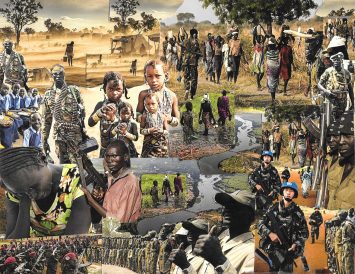
“Never Again” Seems To Never Apply Anymore
While a peace accord was reached in February 2020 to end civil war in South Sudan, the agreement remains extremely fragile and needs international support to hold together Righting the...
Continue reading

Recent Analysis

View All Analysis

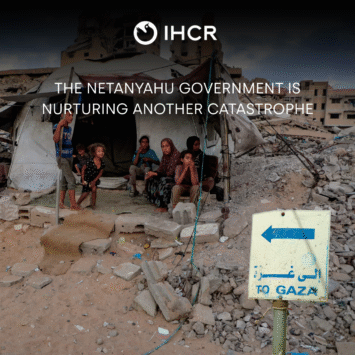
The Netanyahu Government is Nurturing Another Catastrophe

A ceasefire that leaves Palestinians hungry, exposed, and mourning is no foundation for peace. From Gaza’s shattered hospitals to the West Bank’s threatened olive groves, Netanyahu’s policies deepen suffering and endanger Israel’s future. How much longer will Washington tolerate cruelty in the name of security? The eight-month ceasefire between Israel and Hamas was supposed to…
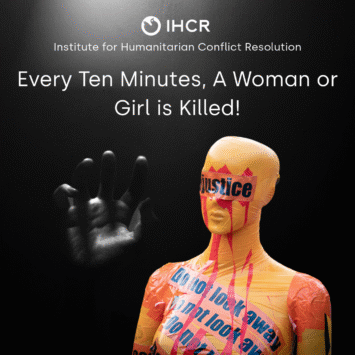
Every Ten Minutes, A Woman or Girl is Killed!

From Kosovo to the United States and France, women have been killed by intimate partners despite repeatedly reporting threats to police and seeking legal protection. Their deaths raise serious questions about police failures, institutional accountability, and whether authorities are doing enough to prevent femicide. Intimate partner violence continues to claim the lives of women worldwide,…

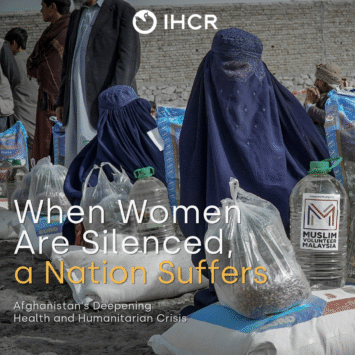
Beyond Rights: The Health and Development Consequences of Restrictions on Afghan Women and Girls

Authors: Nadia Akseer1,2, Sonia Hamadi2, Zainab Hashimi3, Nesarulhaq Shadab4, Hana Tasic1,2 Affiliations: 1 Johns Hopkins University (USA) 2 Modern Scientist Global (Canada) 3 Bard College (USA) 4 University of California, Berkeley (USA) 1 Introduction and Background The return of the Taliban on August 15, 2021, brought significant changes to Afghanistan’s social, political, and institutional landscape,…

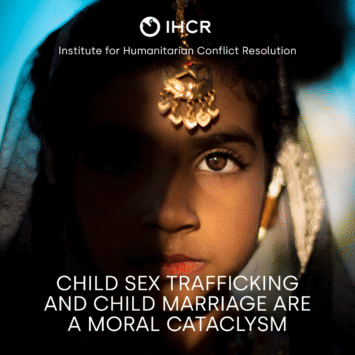
Child Sex Trafficking and Child Marriage are a Moral Cataclysm

This essay treats child sex trafficking and child marriage as a single moral catastrophe: the reduction of a child to a commodity, a transaction, a means to someone else’s end. Both destroy the very conditions under which choice, dignity, and personhood become possible — and both survive on our averted eyes. What is at stake…

Latest Interviews

View All Interviews

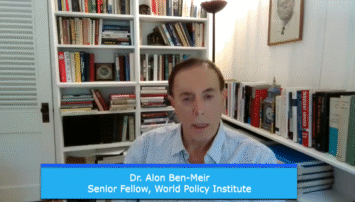
Jewish Life TV – Update on Hamas-Israel War with Dr Alon Ben-Meir

Latest Podcasts

View All Podcasts

On the Issues Episode 153: Elizabeth Hoffman

Alon Ben-Meir · On the Issues Episode 153: Elizabeth Hoffman

On the Issues Episode 151: Anne Speckhard

Alon Ben-Meir · On the Issues Episode 151: Anne Speckhard

On the Issues Episode 150: Dimitris Eleas

Alon Ben-Meir · On the Issues Episode 150: Dimitris Eleas

Video

View All Videos

Jewish Life TV – Update on Hamas-Israel War with Dr Alon Ben-Meir

Recent Social Activity

Used for the like, share, comment, and reaction icons
Institute for Humanitarian Conflict Resolution

Institute for Humanitarian Conflict Resolution

318

The Institute for Humanitarian Conflict Resolution embraces a philosophy of peace and reconciliation to ensure that men, women, and especially children in many violent conflict-ridden countries have hope for a better and more promising future

Institute for Humanitarian Conflict Resolution
1 day ago
Institute for Humanitarian Conflict Resolution

Childhood should be a time of learning, safety, and opportunity. Yet millions of children worldwide are denied these fundamental rights. According to UNICEF and the International Labor Organization, nearly 138 million children were engaged in child labor in 2024, including 54 million performing hazardous work that threatens their health, safety, and development. Many of these children work long hours in agriculture, factories, mines, and domestic service, often under dangerous conditions. Instead of attending school and enjoying their childhood, they face exploitation, physical exhaustion, and limited opportunities for a better future. Despite international commitments to eliminate child labor, poverty, inadequate education, and weak labor protections continue to expose vulnerable children to exploitation. The UN Convention on the Rights of the Child guarantees protection from economic exploitation and harmful work. Yet the United States remains the only country that has not ratified the Convention. Governments must strengthen labor laws, ensure access to education, support families struggling with poverty, and hold employers accountable for exploiting children. Economic development should never come at the expense of children's safety and future. No child should be forced to choose between survival and education. Ending child labor is not charity. It is a fundamental human rights obligation. ... See MoreSee Less

Childhood should be a time of learning, safety, and opportunity. Yet millions of children worldwide are denied these fundamental rights. According to UNICEF and the International Labor Organization, nearly 138 million children were engaged in child labor in 2024, including 54 million performing hazardous work that threatens their health, safety, and development. Many of these children work long hours in agriculture, factories, mines, and domestic service, often under dangerous conditions. Instead of attending school and enjoying their childhood, they face exploitation, physical exhaustion, and limited opportunities for a better future. Despite international commitments to eliminate child labor, poverty, inadequate education, and weak labor protections continue to expose vulnerable children to exploitation. The UN Convention on the Rights of the Child guarantees protection from economic exploitation and harmful work. Yet the United States remains the only country that has not ratified the Convention. Governments must strengthen labor laws, ensure access to education, support families struggling with poverty, and hold employers accountable for exploiting children. Economic development should never come at the expense of childrens safety and future. No child should be forced to choose between survival and education. Ending child labor is not charity. It is a fundamental human rights obligation.
View on Facebook
· Share
Share on Facebook Share on Twitter Share on Linked In Share by Email
View Comments
  • Likes: 0
  • Shares: 0
  • Comments: 0
Institute for Humanitarian Conflict Resolution
2 days ago
Institute for Humanitarian Conflict Resolution

Dr. Yossef Ben-Meir
Reconciling a “Two-Speed” Morocco Requires a Shift in National Consciousness

The Journal for Humanitarian Conflict Resolution, in its Fall 2026 edition, features an insightful contribution by Dr. Yossef Ben-Meir examining the persistent divide between urban development and rural poverty in Morocco.
Although Morocco’s development frameworks prioritize local communities, yet the divide between urban progress and rural poverty persists. Dr. Yossef Ben-Meir argues that the central failure lies in implementation: inadequate decentralization, limited community participation, and insufficient commitment to rural development. Drawing on decades of experience, he calls for investment in locally driven projects, stronger support for rural women and youth, and accessible community financing. Bridging Morocco’s “two-speed” divide requires more than policy reforms and resources; it demands a national commitment to confronting rural poverty and empowering communities to determine their own futures.
ihcr.institute/wp/wp-content/uploads/2026/11/IHCR-Journal-Fall-2026-FINAL-2.pdf
... See MoreSee Less

Dr. Yossef Ben-Meir
Reconciling a “Two-Speed” Morocco Requires a Shift in National Consciousness  The Journal for Humanitarian Conflict Resolution, in its Fall 2026 edition, features an insightful contribution by Dr. Yossef Ben-Meir examining the persistent divide between urban development and rural poverty in Morocco. 
Although Morocco’s development frameworks prioritize local communities, yet the divide between urban progress and rural poverty persists. Dr. Yossef Ben-Meir argues that the central failure lies in implementation: inadequate decentralization, limited community participation, and insufficient commitment to rural development. Drawing on decades of experience, he calls for investment in locally driven projects, stronger support for rural women and youth, and accessible community financing. Bridging Morocco’s “two-speed” divide requires more than policy reforms and resources; it demands a national commitment to confronting rural poverty and empowering communities to determine their own futures.
https://ihcr.institute/wp/wp-content/uploads/2026/11/IHCR-Journal-Fall-2026-FINAL-2.pdf
View on Facebook
· Share
Share on Facebook Share on Twitter Share on Linked In Share by Email
View Comments
  • Likes: 0
  • Shares: 1
  • Comments: 0
Institute for Humanitarian Conflict Resolution
2 days ago
Institute for Humanitarian Conflict Resolution

THE NETANYAHU GOVERNMENT IS NURTURING ANOTHER CATASTROPHE
In his latest article, Dr. Alon Ben-Meir warns that Israel’s policies in Gaza and the West Bank are deepening Palestinian suffering and undermining prospects for lasting peace. Despite an eight-month ceasefire, humanitarian aid deliveries reportedly remain far below agreed levels, leaving thousands of displaced families struggling to survive without adequate food, shelter, and medical care. With winter approaching, restrictions on essential supplies and humanitarian organizations are making an already devastating situation even more dangerous. Ben-Meir also highlights the deadly Israeli strike on Nasser Hospital, which killed medical personnel and civilians and disrupted critical healthcare services. Meanwhile, in the West Bank, escalating settler violence against Palestinian farmers, particularly during the olive harvest, threatens livelihoods and further destabilizes communities. He argues that these actions not only violate fundamental humanitarian principles but also fuel resentment and undermine Israel’s long-term security. Calling for stronger international action, Ben-Meir urges the United States and European governments to move beyond statements of concern and demand measurable compliance with humanitarian commitments, civilian protection, and accountability. He emphasizes that lasting peace cannot emerge from collective suffering, destroyed hospitals, and devastated livelihoods. Palestinian dignity and Israeli security must be protected together; otherwise, both peoples risk being drawn into another avoidable catastrophe.
ihcr.institute/writing/the-netanyahu-government-is-nurturing-another-catastrophe/
... See MoreSee Less

THE NETANYAHU GOVERNMENT IS NURTURING ANOTHER CATASTROPHE
In his latest article, Dr. Alon Ben-Meir warns that Israel’s policies in Gaza and the West Bank are deepening Palestinian suffering and undermining prospects for lasting peace. Despite an eight-month ceasefire, humanitarian aid deliveries reportedly remain far below agreed levels, leaving thousands of displaced families struggling to survive without adequate food, shelter, and medical care. With winter approaching, restrictions on essential supplies and humanitarian organizations are making an already devastating situation even more dangerous. Ben-Meir also highlights the deadly Israeli strike on Nasser Hospital, which killed medical personnel and civilians and disrupted critical healthcare services. Meanwhile, in the West Bank, escalating settler violence against Palestinian farmers, particularly during the olive harvest, threatens livelihoods and further destabilizes communities. He argues that these actions not only violate fundamental humanitarian principles but also fuel resentment and undermine Israel’s long-term security. Calling for stronger international action, Ben-Meir urges the United States and European governments to move beyond statements of concern and demand measurable compliance with humanitarian commitments, civilian protection, and accountability. He emphasizes that lasting peace cannot emerge from collective suffering, destroyed hospitals, and devastated livelihoods. Palestinian dignity and Israeli security must be protected together; otherwise, both peoples risk being drawn into another avoidable catastrophe. 
https://ihcr.institute/writing/the-netanyahu-government-is-nurturing-another-catastrophe/
View on Facebook
· Share
Share on Facebook Share on Twitter Share on Linked In Share by Email
View Comments
  • Likes: 0
  • Shares: 0
  • Comments: 0
Load more
  • Board of Directors
  • FAQ
  • Privacy Policy
Sign up for our email newsletter to get latest updates to your inbox.

Copyright 2004 - 2026, Dr. Alon Ben-Meir. All rights reserved