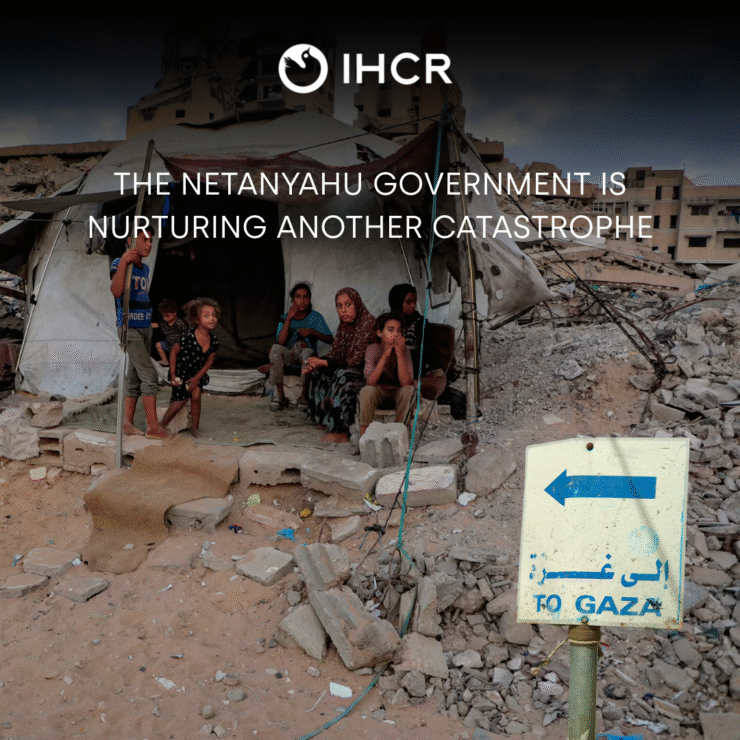
The Netanyahu Government is Nurturing Another Catastrophe

The eight-month ceasefire between Israel and Hamas was supposed to bring relief. Instead, Haaretz reporting reveals a sustained failure to meet aid commitments. The agreement called for 4,200 trucks carrying humanitarian assistance and commercial goods to enter Gaza weekly—roughly 18,200 monthly. Israeli data obtained by the newspaper showed that deliveries since March averaged only about half that amount. October’s total fell to just over 6,500. Israel’s military coordination agency, COGAT, disputes the findings and says it is meeting its obligations. The reported shortfall nevertheless demands an independent accounting.
These deliveries were meant to include far more than food. Gaza needs fuel, medicines, medical equipment, shelter materials, and supplies to repair essential infrastructure. Feeding people while denying them adequate shelter, sanitation, and functioning hospitals does not constitute recovery. It merely prolongs survival under intolerable conditions.
Winter makes these failures especially dangerous. Rain is falling on families already exhausted by displacement. Tents offer little protection when water seeps through their floors and wind tears their coverings. The United Nations warns that delivery restrictions, alongside funding shortages, are undermining the humanitarian response. Aid agencies describe lengthy clearance procedures and unexplained refusals to admit shelter supplies. The weather is unavoidable, but leaving people inadequately protected is not.
Restrictions on humanitarian organizations compound the crisis. Israel has barred Doctors Without Borders’ international staff and imports over its refusal to provide lists of local employees. Israel says these requirements prevent terrorist exploitation. The organization says it cannot surrender staff information without assurances of their safety. Whatever the dispute, vulnerable patients are paying the price. Security procedures must not become an instrument for disabling lifesaving care.
The attack on Nasser Hospital exposes Netanyahu’s cruelty and the human stakes with devastating clarity.
Shortly after midnight on November 12, an Israeli strike hit the hospital’s surgical building in Khan Younis. Doctors Without Borders reported six people killed, including a surgeon and a child, and 52 wounded. It said no warning preceded the strike. Emergency, radiology, laboratory, and operating departments were put out of service. NPR subsequently reported that the death toll had risen to seven.
Among those killed were surgeon Dr. Rizk Abu Shaira and 13-year-old Jihad Abu Tilikh. Israel said it targeted a Hamas commander and other militants. That assertion must face independent scrutiny, not serve as a substitute for accountability. A hospital’s destruction reaches far beyond those killed immediately. It also endangers everyone whose treatment can no longer proceed.
Meanwhile, Palestinians in the West Bank face another assault on their ability to remain on their land. The UN humanitarian office documented 377 olive-harvest-related settler attacks from September through early November, exceeding the total recorded during any previous harvest season. Farmers faced assaults, stolen olives and equipment, and restrictions on access to their groves.
An olive harvest is not merely an agricultural event. It represents income, continuity, and attachment to the land. Attacking farmers and destroying their livelihoods makes ordinary existence increasingly precarious. A government serious about security would protect them and prosecute their attackers.
What future does this treatment prepare? Palestinians will not disappear. Nor will Israelis become safer because another Palestinian child grows up associating Israel with humiliation and loss. Such policies risk entrenching hatred and preparing the ground for another avoidable catastrophe.
International pressure must therefore carry consequences. On November 17, Britain sanctioned eight companies involved in West Bank settlement construction and an activist movement that has blocked aid to Gaza. These are concrete measures, not merely expressions of concern. The US and other EU states should follow suit.
Moreover, Washington should likewise make its support conditional on verifiable humanitarian access, civilian protection, and accountability. Trump should demand measurable compliance with the ceasefire’s humanitarian commitments.
American journalists, lawmakers, religious leaders, and citizens must insist on answers. How many shattered wards and flooded tents must precede meaningful action?
What does Netanyahu believe Israel would gain by making Palestinian life unbearable? Security cannot be built on shattered hospitals, obstructed relief, and devastated livelihoods. The Israeli government continues to pursue policies that deepen Palestinian suffering while poisoning the prospect of coexistence. The choice is not between Palestinian dignity and Israeli security. It is between protecting both or condemning them to another avoidable catastrophe.