Beyond Rights: The Health and Development Consequences of Restrictions on Afghan Women and Girls

Authors: Nadia Akseer1,2, Sonia Hamadi2, Zainab Hashimi3, Nesarualhaq Shadab4, Hana Tasic1,2
Affiliations:
1 Johns Hopkins University (USA)
2 Modern Scientist Global (Canada)
3 Bard College (USA)
4 University of California, Berkeley (USA)
1 Introduction and Background
The return of the Taliban on August 15, 2021, brought significant changes to Afghanistan’s social, political, and institutional landscape, with important implications for the progress made in advancing the rights and opportunities of Afghan women and girls over the preceding two decades [1,2]. Following the fall of the first Taliban regime in 2001, Afghanistan established constitutional and statutory frameworks to guarantee gender equality, including the 2004 Constitution, the 2003 ratification of the Convention on the Elimination of All Forms of Discrimination Against Women (CEDAW), and the 2009 Law on the Elimination of Violence Against Women (EVAW) [3–5]. Supported by international partners, the expansion of primary and secondary healthcare through the Basic Package of Health Services (BPHS) and Essential Package of Hospital Services (EPHS) significantly strengthened the health system, helping reduce the maternal mortality ratio from approximately 1,600 to 620–638 per 100,000 live births [6,7]. At the same time, female educational participation expanded dramatically, with female primary school attendance reaching 2.5 million and female literacy nearly doubling from 17% in 2001 to 30% by 2018 [2,8].
This institutional framework has been systematically dismantled since August 2021 through an escalating series of de facto edicts targeting women’s fundamental rights [2,7]. Afghanistan is currently the only country in the world where girls are barred from attending secondary school beyond the sixth grade and women are banned from tertiary education [1,8–11]. This systematic exclusion culminated in December 2024 with directives suspending women’s medical, nursing, and midwifery education [7,12–14]. These educational bans are compounded by stringent mobility restrictions, such as the mandatory male guardian (mahram) requirement for long-distance travel, strict public dress codes, and prohibitions on female employment in non-governmental organizations (NGOs) and the United Nations [2,8,9,15,16]. International human rights organizations and legal experts increasingly classify this systematic erasure of women from public life as gender apartheid [9,17].
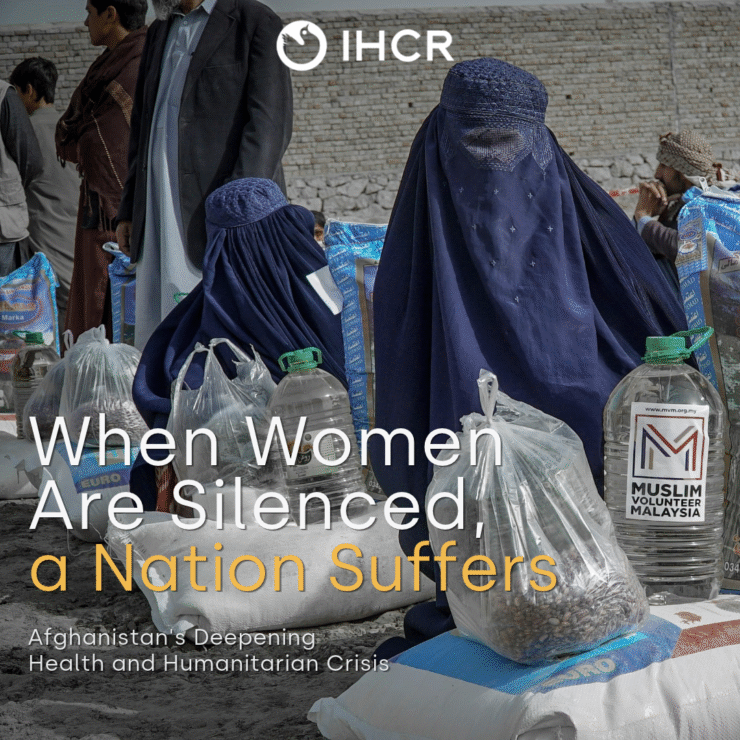
Beyond its severe human rights implications, this structural exclusion has catalyzed a profound public health and economic crisis [6,18]. In 2026, an estimated 21.9 million people, approximately 45% of the population, require humanitarian assistance [9,19,20]. The prohibition of female post-primary education directly severs the human capital pipeline, with projections indicating that key social sectors could lose up to 20,000 skilled teachers and 5,400 health workers by 2030, representing approximately 25% of the 2021 female workforce [19]. In a deeply gender-segregated society where male healthcare providers are culturally or legally restricted from treating female patients, the absence of qualified female health professionals directly constrains healthcare access, threatening maternal, newborn, and child survival [6,12,14,21,22].
Moving beyond high-level policy analysis, this chapter examines the human impact of these education and mobility restrictions on the daily lives of Afghan women, households, and communities. It demonstrates how restricting girls’ learning and women’s agency impairs household financial resilience, accelerates economic losses, and transmits disadvantage across generations through heightened risks of malnutrition, child marriage, and maternal mortality [18,19,23]. Grounded in empirical evidence, this analysis underscores that while principled international advocacy remains imperative to challenge gender persecution, immediate, practical health-system mitigations are urgently required to preserve life-saving care for millions of Afghan women and children today [2,6,7,13].
2 Analysis of the Issue
Restricting girls’ and women’s education, employment, and mobility in Afghanistan contradicts international law, has attendant human rights violations, and has meaningful implications for Afghanistan’s institutions that depend on funding from external sources.
The de facto authorities (DFA) have systematically eroded Afghan girls’ and women’s rights in myriad ways, including banning girls’ education beyond 6th grade, banning women from working for the government, national NGOs, and international NGOs, banning women from public spaces such as parks, gyms and amusement parks, and requiring women to be accompanied by a mahram when out of the home. The legal basis for these developments is an amalgam of individual decrees and policies passed by the DFA at the national and provincial level resulting in confusion on the ground, but also a universal restriction on women’s and girls’ basic rights. Upon returning to power in 2021, the 2004 constitution was suspended as it was deemed by the DFA to be inconsistent with sharia law, and since then, the DFA have been ruling without a clear legal framework backing their decisions on the rights of girls and women [2].
The aforementioned laws contradict CEDAW obligations to eliminate all forms of discrimination against women, including in public and political life, and to include women equally in education, employment and health care [2]. They are also in contradiction of the Universal Declaration of Human Rights, which enshrine every person’s right to equality and non-discrimination, including on the basis of sex and gender [24]. The UN Special Rapporteur on the situation of human rights in Afghanistan and the Working Group on the discrimination against women and girls have described systematic and widespread discrimination against women and girls after interviewing Afghans and conducting site visits [24]. Although the DFA have claimed to be protecting women and girls through restrictions on their freedoms, the laws serve to perpetuate extreme gender-based discrimination and censorship [24].
Constituting a response to the DFA’s human rights violations, international donors have frozen or withdrawn aid in order to avoid legitimizing the new regime [25,26]. The massive cuts to international funding are exacerbating issues within an already fragile system, diminishing life-saving programming and disrupting service delivery [25]. International humanitarian aid cuts have deeply affected Afghanistan’s women’s organizations which have seen a rise in demand, but a decline in funding. Forty percent of women’s organizations are expected to close within the year 2026, even as over one million girls and women lack access to critical services since January 2025 [27]. The human rights situation in Afghanistan continues to deteriorate, in particular for girls and women [28]. UN Human Rights Chief Volker Türk stated that “Women and girls are the present and the future, and the country cannot thrive without them [28].” It is high time that both the country’s leadership and international community recognized this truth and worked to reinstate the rights and freedoms of girls and women in Afghanistan.
3 Human Impact
Since the Taliban’s return to power in August 2021, Afghanistan has become the only country in the world that bars girls from attending school beyond grade six [29]. For nurses, midwives, and doctors-in-training, a second decree in December 2024 closed the one remaining door – private medical institutes – that had let young women keep studying after schools and universities shut their doors to them [30]. A third set of restrictions, requiring women to travel with a male guardian, or mahram, has meanwhile reached into one of the most urgent moments a woman can face: labour and delivery. Together, these policies are not abstract; they are reshaping individual lives in ways that are now well documented.
A stolen childhood. Kawsar (a pseudonym used to protect her identity) is 14 years old and lives in northern Afghanistan. She completed sixth grade in 2024, the year her classroom, and, with it, the ordinary texture of being a child, disappeared. She had 13 classmates; most are now strangers to her; their friendships arrested before they could properly form [31]. What replaced school is not a pause but a different life: household chores, long hours at home, and the daily ache of watching her younger sister walk out the door each morning to a Grade 3 classroom she herself can no longer enter. Kawsar still says she wants to become a midwife, to help women in her community and save lives, but she describes what confinement has done to her in stark terms: “Being at home has made me mentally ill,” she says. “Most of the time I fight with my sisters.”[31] Her distress is not an isolated reaction but a documented pattern: a 2024 survey of Afghan girls found that 87.6% showed symptoms of depression and nearly half reported suicidal ideation since the education ban began, a generation absorbing, in private, what a policy decided in public [32]. Kawsar is one of an estimated 2.6 million Afghan girls denied secondary education since 2021, out of roughly 3.8 million Afghan girls aged 7–18 who were out of school altogether in 2024, a cohort that grows by an estimated 250,000 more girls with every additional year the ban remains in force [19].
A profession lost days before graduation. For women who had managed to keep studying despite the university ban, nursing and midwifery institutes were, in the words of one student, “our last chance to continue our education.”[30] Zohra (a pseudonym used to protect her identity) was enrolled at the Abu Ali Sina Institute in Balkh province and was just days from completing her final semester of midwifery training when the December 2024 order shut the institute’s doors to her. “I had set a new goal and worked hard, receiving good grades,” she said. “I was on my way to becoming a midwifery graduate, to help my family, my country, and other women. Now, I’ve truly lost all hope for life.”[30] Zohra’s near-completion makes her case a stark illustration of a ban that shut out thousands of women mid-credential, at the moment Afghanistan’s health system most needs trained female providers [30]. The stakes of that timing are structural, not incidental: in a society where cultural norms mean women largely seek and receive care only from other women, a ban on training the next generation of female nurses, midwives, and doctors does not just end individual careers like Zohra’s, it closes off the only channel through which millions of Afghan women and girls can access healthcare at all [30].
A checkpoint, a stillbirth, a death. The mahram requirement has proven lethal even in obstetric emergencies. Nasrin, a mother of seven from Yangi Areeq village, went into active labour and was being rushed by her own mother, Zarin Gul, toward the nearest government hospital, roughly an hour away. At a Taliban checkpoint along the route, fighters refused to let the two women pass because no male guardian was travelling with them; one warned, “You must bring a mahram. Otherwise, we will not allow you to go to the hospital.”[33] Zarin Gul lied, claiming their rickshaw driver was a relative, but the family lost precious time at that checkpoint and others before finally reaching the hospital. By then it was too late: doctors found that the baby had died in utero and that Nasrin’s uterus had ruptured from excessive bleeding. Both mother and child died, leaving Nasrin’s seven children motherless [33].
These three accounts, a girl locked out of a classroom, a midwife locked out of her own graduation, a mother locked out of a hospital, describe the same underlying mechanism: policies that treat women’s presence in public space, in a lecture hall, or on a road to a delivery ward as a problem to be controlled, regardless of the human cost. They are not isolated tragedies; they are the predictable output of decrees that now govern the daily lives of millions of Afghan women and girls.
4 Broader Consequences
The human stories above are not endpoints; they are early signals of consequences that compound the longer restrictions remain in force. The Taliban’s edicts on education, medical training, and movement do not only harm the individual women and girls they target, they degrade the systems Afghanistan depends on for health, security, and economic survival.
Health system collapse, short and long term. In the near term, barring women from nursing and midwifery training is emptying the pipeline of female health workers in a country where cultural and legal norms mean women can largely only be treated by women. Modeling by UNICEF Innocenti projects that Afghanistan’s health sector could lose 5,400 skilled health workers by 2030 and 9,600 by 2035, roughly a quarter of the 2021 female health workforce, directly as a result of the education bans [19]. Longer term, the loss compounds through a maternal-education channel: children of mothers with no education already have more than three times the odds of missing all vaccinations compared to children of college-educated mothers (30.3% versus 9.6% zero-dose), and stunting was projected to climb from 44.7% to 45.6% nationally by 2025 as the pool of educated mothers shrank, an additional 10,000 stunted children from this effect alone [19]. Because Afghanistan already has one of the world’s highest maternal mortality ratios, and cases like Nasrin’s show restrictions actively causing delivery-related deaths, the trajectory points toward a widening, self-reinforcing health crisis: fewer trained providers, fewer educated mothers, worse outcomes for the next generation, repeating.
Economic costs, compounding annually. The World Bank’s 2018 global review estimates that failing to educate girls to the same level as boys costs countries between US$15 trillion and $30 trillion in lost lifetime productivity and earnings worldwide, a scale that underscores how structurally costly Afghanistan’s policy is, even before country-specific modeling [34]. Afghanistan-specific data confirms the pattern: current restrictions on women’s education and labour force participation are already costing the country at least AFN 5.3 billion (US$84 million) a year, equal to roughly 20% of annual economic growth [19]. If decrees remain in place through 2030, UNICEF Innocenti projects a potential long-term GDP loss of up to 12.5%, compared with a potential gain of up to 35% of GDP over women’s working lifetimes if restrictions were reversed [19]. These are not one-time losses; each additional year subtracts further, and an estimated 100,000 women who were unable to resume university study in 2021 represent a stock of foregone skilled labour that a fragile economy, already reliant on shrinking remittances, can ill afford to lose [19].
Social, security, and humanitarian strain, short and long term. In the shorter term, excluding girls from education past age 11 or 12 is already pushing families toward child marriage as a coping response to lost prospects and economic hardship. UN Women projects that if current restrictions continue, Afghanistan will see a 25% rise in child marriage, a 45% increase in early childbearing among adolescent girls, and at least a 50% surge in maternal mortality by 2026 [35]. Child marriage means girls as young as 12 or 13 leaving whatever schooling remains open to them, entering pregnancy before their bodies or support networks are ready for it, and losing the independence that comes with earning an income. These outcomes compound the maternal health risks already illustrated by cases like Nasrin’s. In the longer term, these patterns become self-perpetuating: child brides have less power to keep their own daughters in school or out of early marriage, so the practice spreads across generations rather than receding as the economy recovers.
Politically and in terms of security, the exclusion of women from public life is not merely a domestic policy with foreign observers watching from a distance, it is an active input into how the international community treats Afghanistan. At a UN Security Council session on Afghanistan in September 2026, member states and Afghan officials directly tied continued restrictions on women to blocked recovery, diminished international standing, and growing calls within the Council for formal condemnation of the exclusion [36]. In practice, this is the mechanism behind isolation: donor governments and multilateral bodies treat the treatment of women as a live, ongoing test the Taliban is failing, which keeps formal recognition off the table, keeps aid flowing through parallel humanitarian channels rather than the state, and may risk giving the Taliban little incentive to reverse course. In the short term, this shows up as a humanitarian caseload: an estimated 21.9 million people, 45% of the population, are projected to need humanitarian assistance in 2026, a burden that a shrinking, less-educated female workforce is less able to help the country absorb [19]. In the longer term, an Afghanistan that cannot normalize relations or attract investment while half its population is excluded from public life risks locking in the isolation, and the aid dependency that comes with it, indefinitely.
Left unaddressed, these restrictions do not simply freeze women and girls in place: they actively erode the human capital, health infrastructure, and economic capacity Afghanistan will need for any future recovery, while compounding, year over year, the social and diplomatic costs of staying isolated.
5 International and Institutional Response
Since the Taliban returned to power in August 2021, the international response to restrictions of Afghan girls and women’s education and mobility has been through diplomatic pressure, support for women led organizations, and taking legal action. In April 2023, the United Nations Security Council unanimously adopted Resolution 2681 calling for the reversal of restrictions on women’s education, employment, freedom of movement, and participation in public life. They also condemned the DFA banning of Afghan women working for the United Nations [37]. In December 2024, the DFA suspended women’s and girls’ access to public and private medical institutes. In response to this nationwide decision, the Security Council members once again urged the DFA for the reversal of their decision [38]. Since August of 2022, the UN women, the International Organization for Migration (IOM), and the United Nations Assistance Mission in Afghanistan (UNAMA) have been conducting consultations with Afghan women. These consultations are held ahead of UN Security Council meetings. In an early 2024 consultation, 745 Afghan women from all throughout Afghanistan’s 34 provinces, were able to give their opinions about international engagement with the Taliban and recommendations on the implementation of women’s rights. These consultations are one of few ways that Afghan women are able to have a say and an influence on politics in Afghanistan [39].
International agencies have also adapted their programs to maintain access to essential services because restrictions have made normal operations difficult. The first objective of the World Health Organization (WHO) in 2025, was to prioritize the health of women and children. They implemented a “for women, by women, with women” approach and prioritized underserved areas [40]. UNICEF reported that in 2025, around 442,000 out of school children, 65% of which were girls, received an education through 14,000 community-based education classes [41]. In their 2025 report, UN Women describe sustaining 140 women’s organizations across all 34 provinces. They have reached 16,000 women through raising awareness, skills training, livelihood assistance, and childcare [35].
International organizations and nations have also taken legal action against the DFA regarding girls’ and women’s education and mobility. In 2025, Amnesty International submitted direct evidence on violations against Afghan women and called for the DFA to reverse its decisions regarding women’s education, employment, and political participation [42]. In 2024, Australia, Canada, Germany, and the Netherlands, called for Afghanistan to be held accountable for its violation of Article 29 of CEDAW [43]. In 2025, the International Criminal Court (ICC) issued arrest warrants for Taliban Supreme Leader Haibatullah Akhundzada and Chief Justice Abdul Hakim Haqqani. The warrants were on the grounds of committing crimes against humanity through persecution on the basis of gender [44].
Even with the efforts made by international organizations, they are limited by DFA restrictions and funding issues. In September 2025, Taliban forces prevented Afghan female UN workers from entering UN compounds in Kabul and other field offices [45]. Aid cuts have also affected these organizations. In 2025, 207 women-led organizations (WLOs) were surveyed, one in three said that they were unable to effectively reach women and girls in their regions any longer. Forty percent of the 207 organizations surveyed reported that donor-depended projects were all on hold and that they needed to let go of 25 percent of women staff [35].
6 Recommendations and Solutions
The restrictions imposed on Afghan women and girls threaten not only their fundamental rights but also Afghanistan’s long-term health, educational, and economic development. While the restoration of girls’ education and women’s participation in public life must remain a central priority, immediate measures are also needed to mitigate the consequences of existing restrictions. The following recommendations focus on protecting essential services, preserving the female workforce, and expanding opportunities for women and girls.
Protect female medical education through a formal health-sector exemption. Afghanistan already has a shortage of female workers; by banning them from medical education, this shortage will increase as more women retire or leave their jobs. UNICEF projects that up to 5,400 health workers will be lost by 2030 and up to 9,600 will be lost by 2035, which is roughly equivalent to one-quarter of the workforce in 2021 [19]. The consequences are more than just workforce shortages—a 2025 report by UNICEF estimated that 1,600 maternal deaths and over 3,500 infant deaths will occur as a result of banning medical education for women [46]. An immediate priority should be securing a written exemption permitting women to pursue medical, nursing, midwifery, and other health-related education, complete clinical training, sit required examinations, and enter the health workforce. Where necessary, women-only classrooms, female instructors, and separate transportation arrangements could facilitate participation. These measures would also align with Afghanistan’s National Health Policy 2025–2030, which prioritizes health workforce development and improved access to healthcare [47].
Protect and strengthen the existing female health workforce. In addition to restoring medical education, immediate efforts are needed to retain female health professionals already working in Afghanistan. Female doctors, nurses, midwives, and community health workers are essential to ensuring women’s access to healthcare, particularly where cultural norms and mobility restrictions limit interactions with male providers. Donors and implementing partners should prioritize the recruitment, retention, fair remuneration, and safe deployment of female health workers. Continued professional development, supportive supervision, and refresher training should be maintained, including through telehealth and digital learning platforms where feasible. Protecting the existing workforce is critical to preventing further deterioration in maternal, newborn, and child health services [48].
Expand women led communities and maternity health services. Afghanistan already has established community-based health models that could be expanded to reach underserved populations. In 2024, the United Nations Population Fund (UNFPA) supported 533 midwife-led family health houses, providing access to reproductive, maternal, newborn, child, and adolescent health services for approximately four million people across 26 provinces. UNFPA also supported 263 mobile health teams and 28 static health facilities, providing health services to approximately seven million people [49]. In 2025, UNFPA established two women-only Midwifery-Led Maternity Care Centres in Kabul and Logar, reaching 89,447 beneficiaries [50]. These models could be expanded through greater investment in female community health workers, midwives, mobile health teams, and community-based service delivery, particularly in remote areas where women face substantial barriers to facility-based care [48].
Protect sustainable financing for essential health and nutrition services. Declining international assistance threatens the continuity of essential healthcare in Afghanistan. Donors should prioritize predictable, sustained financing for the BPHS and EPHS, which provide the foundation for maternal, newborn, child, and adolescent healthcare. Funding should also protect essential nutrition interventions, including the prevention and treatment of malnutrition among women and children. Greater integration of health, nutrition, and education interventions at facility and community levels could improve service delivery efficiency and reduce missed opportunities to reach vulnerable women and girls. Maintaining these services is particularly important as restrictions on women’s education and employment increase demand for humanitarian assistance [48].
Strengthen referral systems and access to essential health commodities. Restrictions on women’s movement, geographic barriers, and shortages of health services can delay access to life-saving care, particularly during obstetric emergencies. Health programmes should strengthen referral pathways between community-based providers, primary health facilities, and hospitals, including emergency transportation and communication systems. Engagement with local authorities and communities is also needed to facilitate women’s timely access to healthcare, including during emergencies when a male guardian may not be available. Reliable procurement and distribution systems should be maintained to prevent interruptions in essential medicines, vaccines, reproductive health supplies, and nutrition commodities. These measures could help reduce preventable maternal, newborn, and child morbidity and mortality.
Sustain community-based education and protect female teachers. While girls remain barred from formal secondary and higher education in Afghanistan, community-based education (CBE) provides an important complementary pathway for children who face barriers to accessing formal primary schools. Unlike formal schooling, CBE delivers education through locally based learning spaces, often closer to children’s homes, helping overcome barriers related to distance, insecurity, poverty, and sociocultural norms. In 2025, UNICEF supported 442,011 marginalized children through 13,971 community-based classes and continued its Girls’ Access to Teacher Education programme, supporting over 1,000 qualified female teachers to improve girls’ enrollment and retention in schools [51]. However, restrictions on girls’ education and women’s employment threaten the sustainability of the female teaching workforce, with an estimated 20,000 female education professionals potentially lost by 2030. Sustained funding for community-based education, expanded opportunities to train female teachers, and continued support for existing female teachers are essential to maintaining access to primary education and preventing the long-term erosion of Afghanistan’s female teaching workforce. These efforts should complement, rather than replace, efforts to restore girls’ access to formal secondary and higher education.
Expand accredited alternate learning pathways for adolescent girls and women. While formal education remains restricted, alternative learning opportunities can help mitigate learning losses and preserve educational opportunities for adolescent girls and women. UNICEF has supported alternative learning approaches using television, radio, and digital platforms to reach out-of-school children, including adolescent girls [46]. In 2026, UNESCO and the Swedish International Development Cooperation Agency (Sida) also partnered to expand alternative learning opportunities and strengthen pathways connecting education with employment and entrepreneurship [52]. These efforts should be expanded, particularly in underserved areas, with attention to accreditation, educational quality, and opportunities for progression into formal education when restrictions are lifted. Although alternative education cannot replace formal secondary schooling or university education, it can help sustain learning and skills development in the interim [48].
Engage male family members, Islamic scholars, and trusted community leaders. Male family members, religious scholars, and community elders can play an important role in supporting women’s education, healthcare access, and participation in society. In 2023, a delegation of Muslim scholars from the Organization of Islamic Cooperation (OIC) met with Afghanistan’s education authorities and emphasized that education is an Islamic obligation for both men and women [53]. In 2025, the OIC and UNAMA also convened Afghan stakeholders around the Jeddah Document on the Rights of Women in Islam, including women’s right to education [54]. Such dialogue should be sustained and expanded to include Afghan and international Islamic scholars, community leaders, and local authorities. Community engagement should also address the importance of women’s access to healthcare, including encouraging male family members to support timely care-seeking, maternal health services, and girls’ education. These efforts should reinforce women’s autonomy rather than make access to essential services dependent on male approval [48].
Strengthen women-led organizations and gender-sensitive humanitarian delivery. Women-led and women-serving organizations play a critical role in reaching Afghan women and girls who may otherwise be excluded from essential services. However, restrictions on female employment and declining donor funding threaten their continued operations. Donors and humanitarian agencies should prioritize sustained financial and operational support for these organizations, including flexible funding and mechanisms that enable female staff to participate safely in service delivery. Humanitarian programmes should work through locally trusted, gender-sensitive delivery channels and consult Afghan women in programme design, implementation, and monitoring. Protecting women’s participation in humanitarian activities is essential to ensuring that assistance reaches those most in need [27,35,48].
These recommendations offer practical approaches to preserving essential services and opportunities for Afghan women and girls under current constraints. However, they are not substitutes for the restoration of women’s rights to education, employment, freedom of movement, and participation in public life. Sustained international advocacy must therefore continue alongside investments in health systems, education, and locally led service delivery to prevent further deterioration in the health and wellbeing of Afghan women and future generations.
7 Conclusion
The restrictions imposed on Afghan women and girls since August 2021 have consequences extending far beyond violations of fundamental human rights. By limiting access to education, employment, healthcare, and freedom of movement, these policies are undermining decades of progress and threatening Afghanistan’s long-term health, economic development, and social stability. The exclusion of women from education and medical training is particularly concerning, as it threatens the future female health workforce and access to essential maternal and child health services. Combined with declining international assistance, these restrictions risk perpetuating cycles of poverty, poor health, and inequality across generations.
Addressing these challenges requires greater international awareness, sustained advocacy, and accountability for policies that systematically exclude women and girls from public life. Governments, international organizations, and donors must continue to advocate for the restoration of women’s fundamental rights while taking immediate action to protect essential services and prevent further harm. Priorities include preserving the female health and education workforce, expanding community-based services, ensuring sustainable financing, and supporting women-led organizations. While these measures can mitigate immediate consequences, they cannot substitute for the restoration of women’s full participation in education, employment, and society. The international community must move beyond expressions of concern toward coordinated, sustained action that holds decision-makers accountable, protects Afghan women and girls, and safeguards the country’s future.
References
- Hasin BA, Ayoubi MM, Ahmad Shayan N. Challenges and prospects: women’s education in contemporary Afghanistan. Front Glob Womens Health. 2025;6:1477145. doi: 10.3389/FGWH.2025.1477145/TEXT
- UN Women. Afghanistan gender country profile 2024. 2024. https://www.unwomen.org/en/digital-library/publications/2024/06/gender-country-profile-afghanistan (accessed 28 September 2026)
- Salehi S. The Dire Condition of Women under Taliban Rule. Global Asia. 2023.
- Schwartz L, Hassanpoor Z, Lane H, et al. Economic constraints and gendered rules: Understanding women’s perspectives of how government-imposed restrictions impact women’s mental health and social wellbeing across Afghanistan. SSM – Mental Health. 2024;6:100327. doi: 10.1016/J.SSMMH.2024.100327
- Hamidi AB, Widianingsih I, Nurasa H. Two decades of women’s underrepresentation in public service leadership: the Islamic Republic of Afghanistan. Centr Asian Surv. 2025;44:20–41. doi: 10.1080/02634937.2024.2391514
- Glass N, Jalazai R, Spiegel P, et al. The crisis of maternal and child health in Afghanistan. Confl Health. 2023;17:28-. doi: 10.1186/S13031-023-00522-Z/METRICS
- Elnakib S, Roberton T, Sadat H, et al. The impact of the women’s medical education ban in Afghanistan on service coverage and maternal and neonatal mortality: a modelling study. Lancet Glob Health. 2026;0:103973. doi: 10.1016/j.langlo.2026.103973
- Motamedi Z. Religious and Tribal Sovereignty in Afghanistan: The Taliban’s Governance, Its Impact on Women’s and Minorities’ Rights, and Global Implications. Hum Rights Q. 2026;48:40–76. doi: 10.1353/HRQ.2026.A982248
- Cousins S. Afghan health under pressure 5 years after Taliban takeover. The Lancet. 2026;408:590–1. doi: 10.1016/s0140-6736(26)01645-4
- United Nations. Five years after Taliban takeover, Afghan women ‘erased from public life’ | UN News. UN News. 2026. https://news.un.org/en/story/2026/08/1168123 (accessed 29 September 2026)
- Banned from education: a review of the right to education in Afghanistan. UNESCO 2025.
- Hamoon W, Krawchenko B, Krawchenko T. Governance and Public Administration Under the Taliban. Asian Aff (Lond). 2025;56:87–111. doi: 10.1080/03068374.2024.2446960
- Majrooh W. The devastating impact of the Taliban’s ban on midwifery and nursing schools. Lancet Glob Health. 2025;13:e622–3. doi: 10.1016/S2214-109X(25)00063-4
- Turkmani S. Afghanistan: the Taliban’s restrictions on midwifery training will jeopardise the health of women and babies. BMJ. 2024;387. doi: 10.1136/BMJ.Q2798
- Popalzay AW. Gender apartheid in education: the Taliban’s educational restrictions and their consequences for Afghan women and girls. J Gend Stud. 2026;35:1301–13. doi: 10.1080/09589236.2025.2521683
- Amiri MH. Obstacles to Women’s Rights to Education: The Taliban Regime and Its Policies on Women’s Education in Afghanistan. Journal of Asian Social Science Research. 2023;5:167–84. doi: 10.15575/JASSR.V5I2.71
- Tan NF, Ineli-Ciger M. Group-based protection of Afghan women and girls under the 1951 Refugee Convention. International & Comparative Law Quarterly. 2023;72:793–817. doi: 10.1017/S0020589323000283
- Ike FN, Ogbodum MU, Usang OU, et al. Closing gender equality gaps in Taliban-ruled Afghanistan. Discover public health. 2025;22:240-. doi: 10.1186/S12982-025-00636-0/METRICS
- Otchere F, Chilombo N, Coursac I. The Costs of Inaction on Girls’ Education and Women’s Labour Force Participation in Afghanistan, Issue brief. Florence 2026.
- Afghanistan Gender Coordination Group, UN Women. 2025 Gender Analysis of Humanitarian Sectors in Afghanistan. 2026. https://reliefweb.int/report/afghanistan/2025-gender-analysis-humanitarian-sectors-afghanistan (accessed 29 September 2026)
- Hamdam P, Pant S, Rahmani FA. Maternal health under the Taliban in Afghanistan: current status and challenges. BMC Pregnancy Childbirth. 2025;25:1293-. doi: 10.1186/S12884-025-08458-3/FIGURES/2
- The Associated Press. EU condemns Taliban suspension of medical education for women and girls. AP News. 2024.
- Chung S hun, Partridge M. Are short-term cultural shocks persistent? Taliban rule and long-run human capital accumulation. J Econ Behav Organ. 2023;207:18–49. doi: 10.1016/J.JEBO.2023.01.005
- Special Rapporteur on the situation of human rights in Afghanistan WG on discrimination against women and girls. Situation of women and girls in Afghanistan. 2023.
- United Nations. Afghanistan: Taliban’s gender oppression and international funding cuts pushing health system toward catastrophe, warns UN expert. UN Press Release. 2026. https://www.ohchr.org/en/press-releases/2026/02/afghanistan-talibans-gender-oppression-and-international-funding-cuts (accessed 30 September 2026)
- Adell F. A silent collapse: How aid cuts and Taliban rule are erasing Afghanistan’s women-led civil society. Alliance. 2026. https://www.alliancemagazine.org/blog/a-silent-collapse-how-aid-cuts-and-taliban-rule-are-erasing-afghanistans-women-led-civil-society/ (accessed 30 September 2026)
- UN Women. Aid cuts, employment bans, movement restrictions: The triple threat to Afghan women. UN Women. 2026. https://www.unwomen.org/en/news-stories/feature-story/2026/07/aid-cuts-employment-bans-movement-restrictions-the-triple-threat-to-afghan-women (accessed 30 September 2026)
- OHCHR. Afghanistan’s human rights situation “continues to deteriorate dramatically”. United Nations Office of the High Commissioner for Human Rights. 2026. https://www.ohchr.org/en/stories/2026/03/report-afghanistans-human-rights-situation-continues-deteriorate-dramatically (accessed 30 September 2026)
- Afghanistan: Ban on secondary education for girls marks four long years | | UN News. United Nations News. 2025.
- Mirzaie M. ‘Are We Not Human?’ Afghan Women In Despair After Taliban Ban Them From Nursing And Midwifery – Health Policy Watch. Health Policy Watch. 2024.
- Quilter M. For girls in Afghanistan, five years out of school is a lifetime. UNICEF Australia. 2026.
- Mohammadi AQ, Neyazi A, Habibi D, et al. Female education ban by the Taliban: A descriptive survey study on suicidal ideation, mental health, and health-related quality of life among girls in Afghanistan. J Public Health (Bangkok). 2024;46:e439–47. doi: 10.1093/PUBMED/FDAE111
- Atef S, Ghani F. Bring a mahram or die: The Taliban threat to expectant mothers. BioMed Central Ltd 2025.
- Wodon Q, Montenegro C, Onagoruwa A. Missed Opportunities: The High Cost of Not Educating Girls. Washington, DC 2018.
- UN Women. Gender alert: Four years of Taliban rule: Afghan women resist as restrictions tighten | Publications | UN Women – Headquarters. 2025.
- United Nations. Five Years into Taliban Rule, Afghanistan Cannot Fully Recover while Women, Girls Remain Excluded, Security Council Hears. 2026.
- UN Security Council. Resolution 2681: adopted by the Security Council at its 9314th meeting, on 27 April 2023. 2023. https://digitallibrary.un.org/record/4009990 (accessed 29 September 2026)
- United Nations Security Council. Security Council Press Statement on Afghanistan. UN Meetings Coverage and Press Releases. 2024;SC/15957. https://press.un.org/en/2024/sc15957.doc.htm (accessed 29 September 2026)
- UN Women, United Nations Assistance Mission in Afghanistan, International Organization for Migration. Summary report of countrywide women’s consultations. 2024.
- World Health Organization. Afghanistan: WHO Health Emergency Appeal 2025. 2025.
- UNICEF. Afghanistan Humanitarian Situation Report 1 January – 31 December 2025 Report # 12. 2026.
- Amnesty International. Afghanistan: Submission to the UN Committee on Elimination of Discrimination against Women, 91st session, 16 June-July 2025 – Amnesty International. Amnesty International. 2025;ASA 11/9406/2025. https://www.amnesty.org/en/documents/asa11/9406/2025/en/ (accessed 29 September 2026)
- Federal Foreign Office. Launch of an initiative on accountability for Afghanistan’s violations of CEDAW declaration – Federal Foreign Office. Federal Foreign Office Press release. 2024.
- International Criminal Court. Situation in Afghanistan: ICC Pre-Trial Chamber II issues arrest warrants for Haibatullah Akhundzada and Abdul Hakim Haqqani. ICC Press Release. 2025.
- United Nations Afghanistan. UN in Afghanistan Calls for Lifting of Restrictions on Female Staff Accessing UN Premises. United Nations Afghanistan. 2025. https://unama.unmissions.org/en/node/63876 (accessed 29 September 2026)
- UNICEF Afghanistan. As new school year starts in Afghanistan, almost 400,000 more girls deprived of their right to education, bringing total to 2.2 million. UNICEF. 2025. https://www.unicef.org/afghanistan/press-releases/new-school-year-starts-afghanistan-almost-400000-more-girls-deprived-their-right (accessed 29 September 2026)
- World Health Organization Eastern Mediterranean Region. Afghanistan’s new National Health Policy (2025–2030): a roadmap to a healthier future. WHO. 2025. https://www.emro.who.int/afg/afghanistan-news/afghanistans-new-national-health-policy-2025-2030-a-roadmap-to-a-healthier-future.html (accessed 29 September 2026)
- Akseer N, Aminee A, Sadat H. Afghanistan’s restrictions on women are becoming a public health emergency. BMJ. 2026;394:e100932. doi: 10.1136/BMJ-2026-100932
- UNFPA Afghanistan. UNFPA Afghanistan 2024 Annual Report: Resilience in the face of challenges. 2025.
- United Nations Population Fund. Annex 3: Orange book of results, 2025: Progress in implementing the UNFPA strategic plan, 2022–2025. 2026.
- UNICEF Afghanistan. UNICEF Afghanistan Annual Report 2025. 2026.
- UNESCO. UNESCO and Sida strengthen alternative learning opportunities and. UNESCO. 2026. https://www.unesco.org/en/articles/unesco-and-sida-strengthen-alternative-learning-opportunities-and-empowerment-pathways-afghan (accessed 29 September 2026)
- Organization of Islamic Cooperation. Muslim Scholars Delegation to Afghanistan Meets the Ministers of Education and Higher Education. Organization of Islamic Cooperation. 2023. https://www.oic-oci.org/en/news/3312 (accessed 29 September 2026)
- Organization of Islamic Cooperation. OIC Office in Afghanistan and UNAMA Conclude a Two-Day Workshop on the Jeddah Document to Advance Women’s Rights in Islam — OIC. Organization of Islamic Cooperation. 2025. https://www.oic-oci.org/en/news/5885 (accessed 29 September 2026)