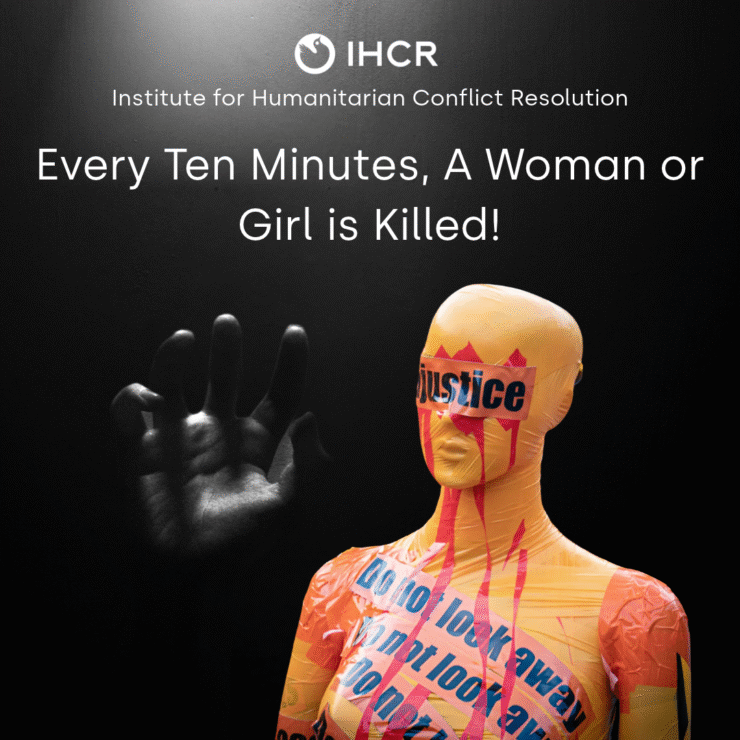
Every Ten Minutes, A Woman or Girl is Killed!

Intimate partner violence continues to claim the lives of women worldwide, despite laws and agencies supposed to protect them. Women have been killed after repeatedly warning police that their lives were in danger. They reported threats, filed complaints, and sought court protection. Yet the men they feared went on to kill them. Their deaths raise serious questions about the institutions responsible for protecting victims of domestic violence. These failures extend far beyond countries with weak legal systems. From Kosovo, where a woman was recently killed with an axe, allegedly by her brother-in-law, after repeatedly seeking police protection, to the United States and France, cases of women murdered after seeking help expose the gap between legal protections and their enforcement.
Domestic violence rarely begins with murder; it often starts with threats, humiliation, controlling behavior and physical abuse that grows worse over time. Many women live in fear for years, some are afraid to leave because they have children, depend financially on their abusers, or have nowhere safe to go. Others find the courage to seek help, only to discover that reporting violence to the police or other institutions does not ensure protection.
According to the 2025 global femicide report published by UN Women and the United Nations Office on Drugs and Crime (UNODC), every ten minutes, a woman or girl is killed by an intimate partner or family member. Approximately 50,000 women and girls were killed by such relations worldwide in 2024, an average of 137 every day. The figures reveal the devastating scale of violence occurring within families and intimate relationships.
Behind these figures are thousands of women whose lives ended in violence, including some who had repeatedly sought protection from authorities. Their deaths raise serious questions about whether warning signs were ignored and whether timely intervention could have saved their lives.
In Kosovo, the killing of Arlinda Zekaj last month brought those questions to the forefront. Her death sparked widespread protests and drew international media attention, as allegations of institutional failures raised concerns about whether authorities had missed opportunities to protect her.
Kosovo: When Laws Fail to Protect Women
On October 25, 2026, 49-year-old Arlinda Zekaj was killed with an axe in Peja, Kosovo, allegedly by her brother-in-law. She had repeatedly sought help from authorities over domestic violence and threats. Just three days before her death she reportedly warned prosecutors in writing that her life was in danger. According to the Associated Press and Radio Free Europe/Radio Liberty, her repeated requests for help raised serious questions about how authorities assessed the danger and responded to her complaints.
Kosovo, Europe’s youngest country, declared independence from Serbia in 2008, following the 1998–1999 war and NATO’s military intervention, in which the United States played a leading role. Since independence, the country has worked to build democratic institutions and bring its laws closer to European human rights standards.
In 2020, Kosovo incorporated the Istanbul Convention, the Council of Europe’s treaty on preventing and combating violence against women, into its constitutional framework. Three years later, it adopted Law No. 08/L-185 on Prevention and Protection from Domestic Violence, Violence Against Women and Gender-Based Violence, strengthening legal protections and defining institutional responsibilities.
However, passing laws has not been enough. According to Justice Ministry figures reported by the Associated Press, police received 2,815 reports of domestic violence in 2025. That compares with 1,915 cases recorded in 2019, an increase of nearly 47 percent, according to Kosovo’s Ministry of Justice. Although increased reporting does not necessarily mean domestic violence has become more widespread, the figures show the continuing scale of the problem.
Concerns also extend to the courts. A 2024 report by the Organization for Security and Co-operation in Europe (OSCE), examining 141 domestic violence cases handled in 2023, identified delays in protection-order proceedings and concerns about sentencing practices. Imprisonment was imposed in only 22 percent of the criminal cases monitored.
Kosovo’s experience exposes a painful contradiction; a country can adopt laws that meet European human rights standards while women who turn to the authorities remain at risk. The responsibility of the state is not measured by the promises written into legislation, but by what happens when someone asks for help.
A Failure That Crosses National Borders
The failure to protect women from domestic violence is not limited to Kosovo. Even in established democracies like the United States and France, women have lost their lives after repeatedly seeking help from authorities. Indeed, according to available figures, the United States in fact has a higher reported rate of women murdered by men relative to its population.
In December 2023, 34-year-old Maria Roque was shot and killed outside her Chicago home. Before her murder, she had repeatedly reported threats and harassment to police and obtained a protection order against her former boyfriend. A CBS Chicago investigation documented problems in how her case was handled, including failures involving protective measures.
In France, 36-year-old Tatiana Mevel was killed by her former partner in August 2025, in front of her two teenage daughters. In the weeks before her death, she had filed complaints about persistent harassment and suspected damage to her vehicle. According to Le Monde, the prosecutor’s account did not identify protective measures taken following her complaints.
These women lived thousands of miles apart, under different governments and legal systems. Yet their stories reveal a troubling similarity—they sought help before they were killed. Their deaths raise questions that no country should ignore. Were the warnings taken seriously? Were protection orders enforced? Did authorities recognize the danger? And could timely intervention have saved their lives?
When Legal Protection Fails in Practice
Laws against domestic violence are essential, but laws cannot protect women on their own. Their effectiveness depends on the officials and institutions responsible for enforcing them. A protection order offers little security if violations are ignored. Repeated complaints mean little if each is treated as an isolated incident. And when police, prosecutors, courts and social services fail to communicate, women can be left navigating a system that does not recognize the full extent of the danger they face.
For women trying to escape abusive relationships, the obstacles are often overwhelming. Financial dependence, housing insecurity, fear of retaliation, and concerns about their children can make leaving extremely difficult. Some women remain in dangerous situations because they have nowhere safe to go. When a woman is killed after repeatedly asking for help, the investigation should not end with the perpetrator. It should also examine whether the authorities followed established procedures, recognized warning signs, and took reasonable steps to prevent the violence.
From Legal Commitments to Effective Prevention
Preventing another killing requires more than passing laws or expressing outrage after a woman’s death. It requires police officers who take threats seriously, prosecutors who act before violence escalates, and courts that ensure protection orders are enforced. As Sarah Hendriks, Director of UN Women’s Policy Division, warned in a November 2025 statement, “Femicides don’t happen in isolation.” Her warning underscores the need to recognize patterns of abuse and intervene before threats turn into fatal violence.
Recognizing danger before it becomes deadly must be a priority. Repeated complaints, stalking, threats to kill, coercive control, access to weapons, and escalating violence should trigger consistent risk assessments and immediate protective measures.
Protection orders must provide real protection. Authorities need reliable systems to serve orders, monitor violations, and respond quickly when women report new threats. A woman should not have to repeatedly prove that she is in danger.
Institutions must work together. Police, prosecutors, courts, social workers, shelters, and victim advocates need clear procedures for sharing information and responding to high-risk cases. Women should not be forced to navigate disconnected institutions while their safety remains at risk.
Failures must have consequences. When a woman is killed after seeking help, independent investigations should examine whether complaints were handled properly and whether opportunities to intervene were missed. Where negligence or misconduct is established, those responsible must be held accountable under the law.
Women need practical support to escape violence. Safe housing, legal assistance, childcare, financial support, and employment opportunities can make the difference between remaining in an abusive relationship and finding a way out. Protection cannot depend on a woman’s financial circumstances.
Governments must examine whether their policies work. Reliable data on domestic violence complaints, protection orders, repeat offenders, prosecutions and case outcomes can reveal patterns of failure and help authorities improve prevention.
These measures must be supported by education and public awareness that challenge attitudes excusing abuse or blaming victims. Preventing femicide is not solely a responsibility of law enforcement. It also requires families, schools, communities and public institutions to reject the normalization of violence against women. No system can prevent every killing. But governments have a responsibility to respond when threats are known and to ensure that women seeking protection are not left to face danger alone.
The true measure of a government’s commitment to protecting women is not the laws it passes or the promises it makes after another killing. It is whether a woman who asks for help can trust that someone will act before it is too late.