IHCR
  • About
  • Contact
IHCR
 
  • Home
  • About
  • Topics
    • Children’s Rights
    • Climate Change
    • Criminal Justice
    • Discrimination
    • Free Speech
    • Gun Violence
    • Healthcare
    • LGBTQ+ Rights
    • Migration and Refugees
    • Poverty
    • War Crimes
    • Women’s Rights
  • Media
  • Events
  • Publications
  • Contact
Home
  • Home
  • About
  • Topics
    • Children’s Rights
    • Climate Change
    • Criminal Justice
    • Discrimination
    • Free Speech
    • Gun Violence
    • Healthcare
    • LGBTQ+ Rights
    • Migration and Refugees
    • Poverty
    • War Crimes
    • Women’s Rights
  • Media
  • Events
  • Publications
  • Contact
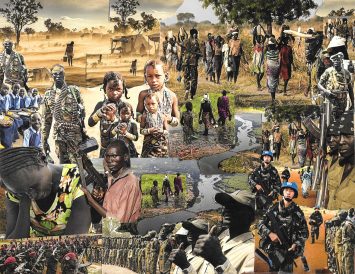
“Never Again” Seems To Never Apply Anymore
While a peace accord was reached in February 2020 to end civil war in South Sudan, the agreement remains extremely fragile and needs international support to hold together Righting the...
Continue reading

Recent Analysis

View All Analysis

From Genocide to Justice: Iraq’s Reparations for Yazidi Survivors

More than a decade after ISIS’s genocide against the Yazidi people, Iraq has begun compensating Yazidi survivors. But justice requires far more than financial support. Introduction On 3 August 2014, the Islamic State (ISIS, also known as ISIL or Da’esh) launched a coordinated attack on the Sinjar region of northern Iraq, home to much of…

Recognition, Right, and the Stateless: A Fichtean Critique of the Plight of the Rohingya

Summary In a world that proclaims human rights as universal, what does it mean that entire peoples are rendered legally nonexistent—human beings for whom, as Hannah Arendt put it, “no law exists”? This essay turns to Johann Gottlieb Fichte’s philosophy of recognition to argue that the Rohingya are not only victims of a humanitarian disaster,…

From Victims to Perpetrators? The Israeli Jewish Case

Introduction One of history’s most troubling paradoxes concerns the Jewish people. For nearly two thousand years, Jews experienced persecution, expulsions, pogroms, discrimination, and ultimately the Holocaust, in which six million Jews were murdered. Yet within a few decades of establishing Israel, many observers came to view the Jewish state as responsible for the dispossession, occupation,…

Israel and Lebanon: The Diplomatic Path to End an Endemic Conflict

For the past year the author of this article has, with a Canadian colleague, been deeply involved in an unofficial (“Track II”) diplomatic effort to create a solid foundation for successful Israel-Lebanon direct talks. We are doing our best to facilitate negotiations aimed at permanently ending 78 years of hostilities and instituting close, bilateral security…

Latest Interviews

View All Interviews

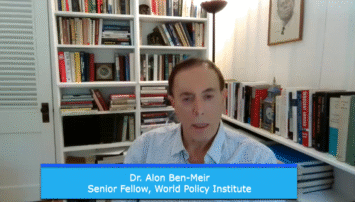
Jewish Life TV – Update on Hamas-Israel War with Dr Alon Ben-Meir

Latest Podcasts

View All Podcasts

On the Issues Episode 153: Elizabeth Hoffman

Alon Ben-Meir · On the Issues Episode 153: Elizabeth Hoffman

On the Issues Episode 151: Anne Speckhard

Alon Ben-Meir · On the Issues Episode 151: Anne Speckhard

On the Issues Episode 150: Dimitris Eleas

Alon Ben-Meir · On the Issues Episode 150: Dimitris Eleas

Video

View All Videos

Jewish Life TV – Update on Hamas-Israel War with Dr Alon Ben-Meir

Recent Social Activity

Used for the like, share, comment, and reaction icons
Institute for Humanitarian Conflict Resolution

Institute for Humanitarian Conflict Resolution

22

The Institute for Humanitarian Conflict Resolution embraces a philosophy of peace and reconciliation to ensure that men, women, and especially children in many violent conflict-ridden countries have hope for a better and more promising future

Institute for Humanitarian Conflict Resolution
1 day ago
Institute for Humanitarian Conflict Resolution

The United Nations is facing a serious funding crisis that is already affecting its ability to carry out human rights and humanitarian work around the world. Although the General Assembly recently approved reforms to ease the immediate financial strain, the problem remains far from resolved. According to Human Rights Watch, delayed and unpaid contributions from member states, including some of the UN's largest financial contributors, have forced critical operations to scale back. As HRW warns, "UN member states should explore new avenues to hold delinquent countries accountable." Protecting human rights requires not only political commitment, but sustained financial and moral support. ... See MoreSee Less

The United Nations is facing a serious funding crisis that is already affecting its ability to carry out human rights and humanitarian work around the world. Although the General Assembly recently approved reforms to ease the immediate financial strain, the problem remains far from resolved. According to Human Rights Watch, delayed and unpaid contributions from member states, including some of the UNs largest financial contributors, have forced critical operations to scale back. As HRW warns, UN member states should explore new avenues to hold delinquent countries accountable. Protecting human rights requires not only political commitment, but sustained financial and moral support.
View on Facebook
· Share
Share on Facebook Share on Twitter Share on Linked In Share by Email
View Comments
  • Likes: 0
  • Shares: 1
  • Comments: 0
Institute for Humanitarian Conflict Resolution
2 days ago
Institute for Humanitarian Conflict Resolution

Despite gradual global progress, 847 million people were living in extreme poverty in 2024, according to updated World Bank estimates. The global extreme poverty rate has been revised upward to 10.4%, with the sharpest increase occurring in the Middle East, North Africa, Afghanistan, and Pakistan region, where poverty has worsened in recent years. New data from Pakistan contributed to an estimated 21 million additional people living in extreme poverty across the region. While projections suggest the global rate could decline to 10.0% by 2026, hundreds of millions continue to face severe hardship. The findings underscore the urgent need for sustained international efforts to reduce poverty and inequality worldwide. ... See MoreSee Less

Despite gradual global progress, 847 million people were living in extreme poverty in 2024, according to updated World Bank estimates. The global extreme poverty rate has been revised upward to 10.4%, with the sharpest increase occurring in the Middle East, North Africa, Afghanistan, and Pakistan region, where poverty has worsened in recent years. New data from Pakistan contributed to an estimated 21 million additional people living in extreme poverty across the region. While projections suggest the global rate could decline to 10.0% by 2026, hundreds of millions continue to face severe hardship. The findings underscore the urgent need for sustained international efforts to reduce poverty and inequality worldwide.
View on Facebook
· Share
Share on Facebook Share on Twitter Share on Linked In Share by Email
View Comments
  • Likes: 0
  • Shares: 0
  • Comments: 0
Institute for Humanitarian Conflict Resolution
5 days ago
Institute for Humanitarian Conflict Resolution

Nearly one million Rohingya remain displaced after fleeing violence and persecution in Myanmar, while those who remain continue to face statelessness, discrimination, and the denial of basic rights. Decades after being stripped of citizenship under Myanmar's 1982 Citizenship Law, the Rohingya remain one of the world's most persecuted and marginalized communities. In this thought-provoking essay, Sam Ben-Meir examines the Rohingya crisis through the philosophical perspectives of Johann Gottlieb Fichte and Hannah Arendt, arguing that statelessness is not merely a humanitarian catastrophe but a profound moral and political failure. He contends that denying an entire people legal recognition is, in effect, denying their personhood. Ben-Meir concludes that protecting the rights of the stateless is not simply an act of compassion but a universal moral obligation, challenging the international community to uphold the fundamental principle that every human being has the "right to have rights."
ihcr.institute/writing/never-again-seems-to-never-apply-anymore/
... See MoreSee Less

Nearly one million Rohingya remain displaced after fleeing violence and persecution in Myanmar, while those who remain continue to face statelessness, discrimination, and the denial of basic rights. Decades after being stripped of citizenship under Myanmars 1982 Citizenship Law, the Rohingya remain one of the worlds most persecuted and marginalized communities. In this thought-provoking essay, Sam Ben-Meir examines the Rohingya crisis through the philosophical perspectives of Johann Gottlieb Fichte and Hannah Arendt, arguing that statelessness is not merely a humanitarian catastrophe but a profound moral and political failure. He contends that denying an entire people legal recognition is, in effect, denying their personhood. Ben-Meir concludes that protecting the rights of the stateless is not simply an act of compassion but a universal moral obligation, challenging the international community to uphold the fundamental principle that every human being has the right to have rights.
https://ihcr.institute/writing/never-again-seems-to-never-apply-anymore/
View on Facebook
· Share
Share on Facebook Share on Twitter Share on Linked In Share by Email
View Comments
  • Likes: 0
  • Shares: 0
  • Comments: 0
Load more
  • Board of Directors
  • FAQ
  • Privacy Policy
Sign up for our email newsletter to get latest updates to your inbox.

Copyright 2004 - 2026, Dr. Alon Ben-Meir. All rights reserved