IHCR
  • About
  • Contact
IHCR
 
  • Home
  • About
  • Topics
    • Children’s Rights
    • Climate Change
    • Criminal Justice
    • Discrimination
    • Free Speech
    • Gun Violence
    • Healthcare
    • LGBTQ+ Rights
    • Migration and Refugees
    • Poverty
    • War Crimes
    • Women’s Rights
  • Media
  • Events
  • Publications
  • Contact
Home
  • Home
  • About
  • Topics
    • Children’s Rights
    • Climate Change
    • Criminal Justice
    • Discrimination
    • Free Speech
    • Gun Violence
    • Healthcare
    • LGBTQ+ Rights
    • Migration and Refugees
    • Poverty
    • War Crimes
    • Women’s Rights
  • Media
  • Events
  • Publications
  • Contact
“Never Again” Seems To Never Apply Anymore
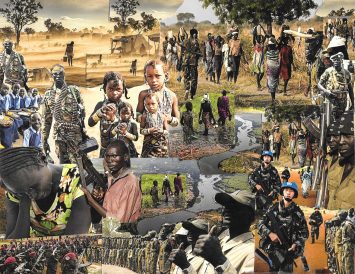
While a peace accord was reached in February 2020 to end civil war in South Sudan, the agreement remains extremely fragile and needs international support to hold together Righting the...
Continue reading

Recent Analysis

View All Analysis

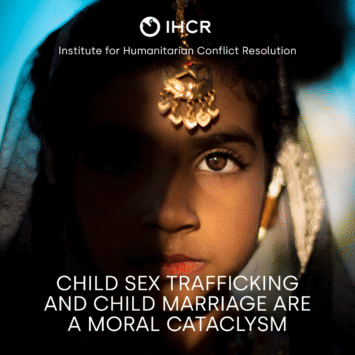
Child Sex Trafficking and Child Marriage are a Moral Cataclysm

This essay treats child sex trafficking and child marriage as a single moral catastrophe: the reduction of a child to a commodity, a transaction, a means to someone else’s end. Both destroy the very conditions under which choice, dignity, and personhood become possible — and both survive on our averted eyes. What is at stake…
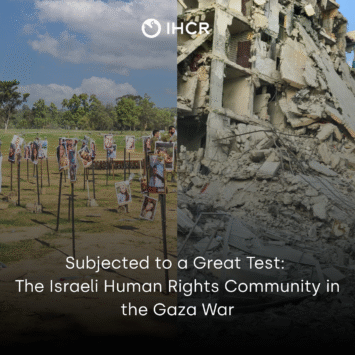
Subjected to a Great Test: The Israeli human rights community in the Gaza war

Introduction On October 7, 2023 Hamas launched a mass attack on communities and military bases in southern Israel. Over 1,100 people were killed on this one day, a majority of them civilians, and over 250 civilians and soldiers were taken hostage. Israel’s airstrikes in the Gaza Strip began that same evening, and a largescale ground…

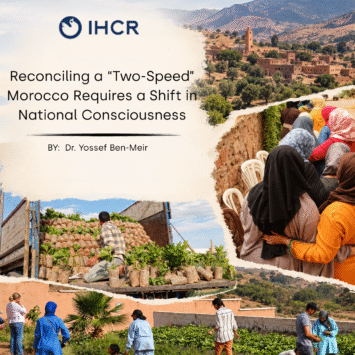
Reconciling a “Two-Speed” Morocco Requires a Shift in National Consciousness

Executive Summary: Morocco has formalized a dynamic development model over the past quarter of a century to guide sustainable growth in rural and urban areas. However, its inadequate implementation, particularly in rural areas, does not reflect the model’s excellent quality, underscoring the need for local community management and decentralization. Intractable rural poverty is more a…

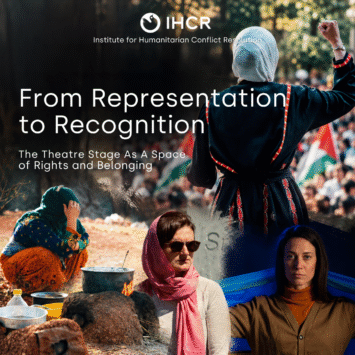
From Representation to Recognition: The Theatre Stage As A Space of Rights and Belonging

Abstract In December 2024, the Bosnian-Herzegovinian NGO Bosanskohercegovačka inicijativa žena (BHWI) developed I Want to Live, a participatory theatre initiative involving migrant women from Palestine, Ukraine, Syria, Iraq, Iran, and Türkiye living in Sarajevo, Bosnia and Herzegovina. Through theatre, lullabies, song, somatic movement, and other verbal and non-verbal forms of expression, the performance brought different…

Latest Interviews

View All Interviews

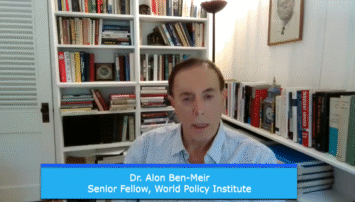
Jewish Life TV – Update on Hamas-Israel War with Dr Alon Ben-Meir

Latest Podcasts

View All Podcasts

On the Issues Episode 153: Elizabeth Hoffman

Alon Ben-Meir · On the Issues Episode 153: Elizabeth Hoffman

On the Issues Episode 151: Anne Speckhard

Alon Ben-Meir · On the Issues Episode 151: Anne Speckhard

On the Issues Episode 150: Dimitris Eleas

Alon Ben-Meir · On the Issues Episode 150: Dimitris Eleas

Video

View All Videos

Jewish Life TV – Update on Hamas-Israel War with Dr Alon Ben-Meir

Recent Social Activity

Used for the like, share, comment, and reaction icons
Institute for Humanitarian Conflict Resolution

Institute for Humanitarian Conflict Resolution

307

The Institute for Humanitarian Conflict Resolution embraces a philosophy of peace and reconciliation to ensure that men, women, and especially children in many violent conflict-ridden countries have hope for a better and more promising future

Institute for Humanitarian Conflict Resolution
19 hours ago
Institute for Humanitarian Conflict Resolution

CHILD SEX TRAFFICKING AND CHILD MARRIAGE ARE A MORAL CATASTROPHE
By Dr. Alon Ben-Meir
Child sex trafficking and child marriage represent a profound violation of human dignity, robbing millions of children of their freedom, safety, and future. These practices continue worldwide, fueled by poverty, conflict, displacement, institutional failures, and widespread indifference. In this compelling essay, Dr. Alon Ben-Meir, a scholar, author, and political analyst, examines the devastating global realities of these abuses, arguing that they represent not merely criminal or social problems but a fundamental moral failure of humanity. Drawing on international statistics, human rights principles, and moral philosophy, Dr. Ben-Meir highlights how children account for 38 percent of detected trafficking victims worldwide, while approximately 12 million girls are married before adulthood each year. He examines how exploitation persists because of inadequate legal protections, institutional corruption, and a failure to hold perpetrators accountable. Dr. Ben-Meir calls for an outright ban on child marriage, stronger prosecution of traffickers and those who exploit children, greater investment in education and child protection, and US ratification of the Convention on the Rights of the Child.
ihcr.institute/writing/child-sex-trafficking-and-child-marriage-are-a-moral-cataclysm/
... See MoreSee Less

CHILD SEX TRAFFICKING AND CHILD MARRIAGE ARE A MORAL CATASTROPHE
By Dr. Alon Ben-Meir
Child sex trafficking and child marriage represent a profound violation of human dignity, robbing millions of children of their freedom, safety, and future. These practices continue worldwide, fueled by poverty, conflict, displacement, institutional failures, and widespread indifference. In this compelling essay, Dr. Alon Ben-Meir, a scholar, author, and political analyst, examines the devastating global realities of these abuses, arguing that they represent not merely criminal or social problems but a fundamental moral failure of humanity. Drawing on international statistics, human rights principles, and moral philosophy, Dr. Ben-Meir highlights how children account for 38 percent of detected trafficking victims worldwide, while approximately 12 million girls are married before adulthood each year. He examines how exploitation persists because of inadequate legal protections, institutional corruption, and a failure to hold perpetrators accountable. Dr. Ben-Meir calls for an outright ban on child marriage, stronger prosecution of traffickers and those who exploit children, greater investment in education and child protection, and US ratification of the Convention on the Rights of the Child.
https://ihcr.institute/writing/child-sex-trafficking-and-child-marriage-are-a-moral-cataclysm/
View on Facebook
· Share
Share on Facebook Share on Twitter Share on Linked In Share by Email
View Comments
  • Likes: 0
  • Shares: 0
  • Comments: 0
Institute for Humanitarian Conflict Resolution
2 weeks ago
Institute for Humanitarian Conflict Resolution

WHEN CHILDREN BECOME INVISIBLE, TRAFFICKERS MOVE IN
Sex trafficking must be understood as the work of a few monstrous individuals acting in isolation. It arises in the cracks of social and economic systems: poverty, homelessness, migration crises, war, family collapse, and failing public institutions. Traffickers prey on desperation. They look for children who have been abandoned by the social contract, children who have fallen through the floorboards of public concern. These children are not hidden; they are simply unseen. And this invisibility has philosophical weight. Social philosophers such as Charles Taylor, Axel Honneth, and Judith Butler argue that personhood is not merely an inner quality but a social achievement. We become subjects through recognition, care, and participation in a shared world. Trafficking destroys that network of recognition. The trafficked child becomes socially erased—not dead but stripped of the relational context in which dignity is affirmed. Their suffering persists in a moral vacuum.
... See MoreSee Less

WHEN CHILDREN BECOME INVISIBLE, TRAFFICKERS MOVE IN
 Sex trafficking must be understood as the work of a few monstrous individuals acting in isolation. It arises in the cracks of social and economic systems: poverty, homelessness, migration crises, war, family collapse, and failing public institutions. Traffickers prey on desperation. They look for children who have been abandoned by the social contract, children who have fallen through the floorboards of public concern. These children are not hidden; they are simply unseen. And this invisibility has philosophical weight. Social philosophers such as Charles Taylor, Axel Honneth, and Judith Butler argue that personhood is not merely an inner quality but a social achievement. We become subjects through recognition, care, and participation in a shared world. Trafficking destroys that network of recognition. The trafficked child becomes socially erased—not dead but stripped of the relational context in which dignity is affirmed. Their suffering persists in a moral vacuum.
View on Facebook
· Share
Share on Facebook Share on Twitter Share on Linked In Share by Email
View Comments
  • Likes: 0
  • Shares: 0
  • Comments: 0
Institute for Humanitarian Conflict Resolution
2 weeks ago
Institute for Humanitarian Conflict Resolution

Reconciling a “Two-Speed” Morocco Requires a Shift in National Consciousness
By Dr. Yossef Ben-Meir

Morocco has established ambitious development frameworks that place local communities at the center of sustainable growth, yet a persistent divide between urban progress and rural poverty remains. Dr. Yossef Ben-Meir argues that the problem lies less in the country’s development model than in its implementation, particularly the lack of effective decentralization, community participation, and sustained commitment to rural development. Drawing on more than three decades of experience in Morocco, Ben-Meir calls for greater investment in locally driven projects, stronger support for rural youth and women, and more accessible financing for community initiatives. He contends that narrowing Morocco’s “two-speed” divide will require not only resources and policy reforms, but a broader national consciousness that treats rural poverty with urgency and empowers communities to shape their own futures.
Dr. Yossef Ben-Meir is an international development expert and President and Co-Founder of the High Atlas Foundation, whose work since 1993 has focused on sustainable development and human development in Morocco and across the Middle East and North Africa. In 2026, he received the Sargent Shriver Award for Distinguished Humanitarian Service.
ihcr.institute/writing/reconciling-a-two-speed-morocco-requires-a-shift-in-national-consciousness/
... See MoreSee Less

Reconciling a “Two-Speed” Morocco Requires a Shift in National Consciousness
By Dr. Yossef Ben-Meir  Morocco has established ambitious development frameworks that place local communities at the center of sustainable growth, yet a persistent divide between urban progress and rural poverty remains. Dr. Yossef Ben-Meir argues that the problem lies less in the country’s development model than in its implementation, particularly the lack of effective decentralization, community participation, and sustained commitment to rural development. Drawing on more than three decades of experience in Morocco, Ben-Meir calls for greater investment in locally driven projects, stronger support for rural youth and women, and more accessible financing for community initiatives. He contends that narrowing Morocco’s “two-speed” divide will require not only resources and policy reforms, but a broader national consciousness that treats rural poverty with urgency and empowers communities to shape their own futures.
Dr. Yossef Ben-Meir is an international development expert and President and Co-Founder of the High Atlas Foundation, whose work since 1993 has focused on sustainable development and human development in Morocco and across the Middle East and North Africa. In 2026, he received the Sargent Shriver Award for Distinguished Humanitarian Service.
https://ihcr.institute/writing/reconciling-a-two-speed-morocco-requires-a-shift-in-national-consciousness/
View on Facebook
· Share
Share on Facebook Share on Twitter Share on Linked In Share by Email
View Comments
  • Likes: 0
  • Shares: 0
  • Comments: 0
Load more
  • Board of Directors
  • FAQ
  • Privacy Policy
Sign up for our email newsletter to get latest updates to your inbox.

Copyright 2004 - 2026, Dr. Alon Ben-Meir. All rights reserved