The Humanitarian Cost of Broken Self-Government: Human Dignity, Federalism, and America’s Crisis of Responsibility

1. Introduction and Background of the Issue
The humanitarian crisis in America is not hidden. It is visible in tents under bridges, the mentally ill cycling through jails, rural hospitals struggling to survive, migrants dying in borderlands, families losing access to care, and citizens who no longer know which level of government is responsible when public systems fail.
We often describe these problems separately: homelessness, mental illness, immigration, poverty, Medicaid, food insecurity, hospital closures, addiction, elder care, public school failure, and the erosion of civic trust. But beneath them lies a deeper institutional collapse: America has lost the ability to connect power with responsibility.
This article is not about one president, one political party, one budget fight, or one social program. I am going to share two personal examples because I have seen them up close: mental health and immigration. They are not the whole crisis but they are evidence of a broader breakdown.
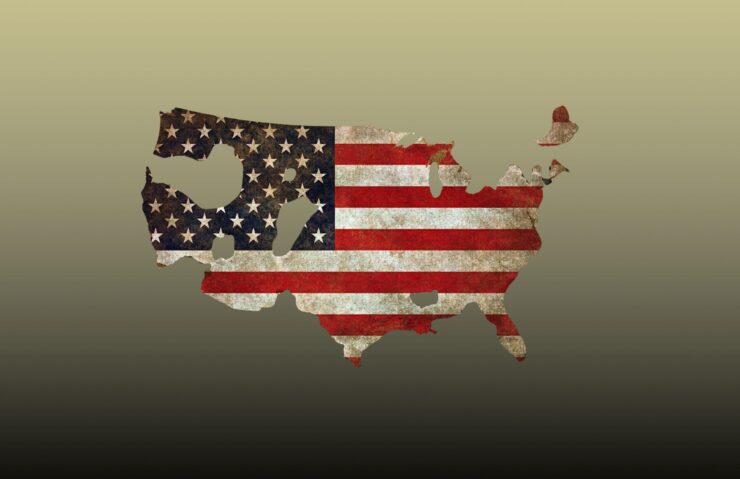
Over the past half-century, the United States has centralized increasing amounts of revenue, authority, and administrative control in Washington, D.C., while weakening the state and local systems that once carried primary responsibility for many services closest to human dignity. The result has not been stable compassion.
It has been a national political football.
One administration expands programs. Another cuts them. One Congress attaches requirements. Another threatens funding. One party speaks the language of compassion while avoiding the structural consequences of disorder. Another speaks the language of order while often ignoring the human beings trapped inside that disorder. Meanwhile, the vulnerable are forced to live with the consequences.
Recent federal social-service reductions illustrate the scale of the risk. The Congressional Budget Office estimated that Medicaid provisions in H.R. 1 would increase the number of people without health insurance by 7.8 million in 2034 relative to baseline projections. The Kaiser Family Foundation, known as the KFF (the US’s leading independent, non-profit organization focused on national health policy, health journalism, and public opinion polling), estimated that the enacted reconciliation package would reduce federal Medicaid spending by $911 billion over ten years and increase the number of uninsured people by 10 million. CBO also estimated that SNAP-related provisions in H.R. 1 would reduce federal spending by $287 billion over the 2025–2034 period.
These are budget numbers that represent families, nursing homes, hospitals, clinics, disabled citizens, working parents, and children. These reductions are not the origin of the crisis. They are evidence of a deeper structural failure that has been building for decades.
A humane republic should not abandon vulnerable people to whichever faction happens to control Washington. But neither can it pretend that a distant federal bureaucracy can compassionately manage every human need in a nation as large, diverse, and locally complicated as the United States.
2. Human Rights, Human Dignity, and the Conflict Dynamics Involved
Human rights abuses do not always arrive as dramatic acts of violence. Sometimes they appear as abandonment, as untreated illness, or as a person sleeping outside a building that once existed to care for people like him. Most commonly now they appear as a rural county losing its hospital or a patient losing access to medication.
In international humanitarian work, many understand that weak institutions, corruption, displacement, poverty, and state failure can produce human suffering. But in the United States, we often resist using that same language about ourselves. We call our failures “policy disputes.” But when policy failure becomes predictable, preventable, and recurring, it becomes a moral crisis.
The dynamic conflict in America today is not simply left versus right. It is nationalized politics versus local human need.
A person with schizophrenia does not live inside a federal budget category. A hungry child does not experience hunger as a partisan talking point. A migrant crossing the desert does not die as an abstraction in an election-year debate. Human suffering is local, immediate, and embodied. But our politics has become nationalized, performative, distant, and often financially captured.
There is also a deeper American conundrum that must be admitted honestly. A nation founded on individual liberty will always be vulnerable to disorder. Freedom allows people to choose, build, move, dissent, fail, worship, speak, organize, and resist authority. That liberty is the source of America’s genius. But it also means the United States will never be as orderly as societies built around centralized control.
A free society cannot eliminate all suffering through executive orders. It cannot anticipate every personal crisis, family collapse, addiction, illness, migration pressure, economic disruption, or moral failure. Liberty produces creativity, but it also produces instability. It allows opportunity, but it also allows neglect. It protects the individual from the state, but it can also leave individuals exposed when families, markets, communities, and local institutions fail.
That is the hard truth: individual liberty without civic responsibility can become abandonment. But government power without constitutional restraint can become domination.
America was born inside that contradiction. The Constitution begins with the words “We the People,” and its Preamble commits the nation to forming “a more perfect Union,” establishing justice, promoting the general welfare, and securing liberty. Yet the nation that wrote those words also tolerated slavery, the greatest legalized humanitarian abuse in American history. The 13th Amendment abolished slavery in 1865, while the 14th and 15th Amendments greatly expanded civil rights after the Civil War. The 14th Amendment prohibited states from denying due process or equal protection of the laws, and the 19th Amendment later guaranteed women the right to vote.
That history matters because it warns against simplistic answers. State and local control alone did not protect human dignity. In many cases, state power was used to deny it. But centralized national power has also failed when it became distant, bureaucratic, politicized, or captured by money. The question is not whether the power should exist but how power can be restrained, localized, accountable, and morally bound to the protection of human dignity.
A humane republic must therefore hold two truths at once. First, liberty requires limits on state power, because government itself can become an instrument of abuse. Second, liberty requires public responsibility, because without institutions capable of intervening when people are abandoned, freedom can become a cruel word for those left without help.
This is the central tension in the American experiment. We are not trying to build a perfectly ordered society at the cost of liberty. Nor should we accept preventable suffering as the price of freedom. The challenge is to build a republic in which freedom and responsibility reinforce each other, where government is close enough to see human suffering, restrained enough not to become oppressive, and accountable enough to be corrected when it fails.
3. Human Stories and Real-Life Case Examples
Bull Street and the Collapse of Public Responsibility
For years, as CEO of South Carolina’s historic preservation non-profit, I saw how the loss of historic resources often revealed a deeper loss: the disappearance of public obligations that earlier generations had once accepted. This article is not about buildings alone. However, buildings can become witnesses and show us what a society once believed it owed to its people.
One of the clearest and most painful examples is the former South Carolina State Hospital campus on Bull Street in Columbia.
In the 1820s, South Carolina began building what became one of the state’s most significant public investments in the treatment of mental illness. The original asylum building was designed by Robert Mills, one of South Carolina’s most important architects and later the designer of the Washington Monument. The South Carolina Department of Archives and History describes the Mills Building as an enduring monument to both the State Mental Hospital founders and Robert Mills.
Over generations, that campus grew into a vast public system utilizing dozens of buildings, totaling over a million square feet, all dedicated in one form or another to mental health treatment, outpatient care, custody, confinement, and intervention.
It was not a perfect system. No man-made system ever is. Institutions for the mentally ill have often reflected both compassion and control. They have provided care, but also confinement. They have offered shelter, but sometimes at the cost of liberty. There were flaws, failures, and practices later generations were right to question.
But the existence of that campus still represented something morally important: South Carolina once accepted that mental illness was a public responsibility.
That responsibility slowly eroded.
After World War II, as more money and authority flowed through Washington, state systems increasingly depended on federal support. This arrangement allowed state politicians to brag about keeping taxes low while federal politicians bragged about delivering money back home. Everyone could claim credit. No one had to fully own the responsibility.
Then, as federal support weakened, as it did under President Reagan’s budget cuts in the 1980s, the weakness of that arrangement was exposed. States had allowed critical human services to become dependent on Washington, but many lacked either the revenue or the political will to replace what was lost. In Columbia, the old Mental Health campus eventually ceased to serve the public purpose for which generations had built and expanded it.
The question was no longer how best to treat the mentally ill. The question became who had the right to control and profit from the property. In 2007, the South Carolina Supreme Court considered whether the 600-acre property was held in a charitable trust and whether, and under what conditions, it could be sold. The court held that the property was subject to a charitable trust, but that a sale could be allowed with proceeds placed in trust for the Department of Mental Health.
A place created for public care became a contest over real estate value.
The property was eventually redeveloped into a mixed-use development district; much of the structures built to provide mental health care were demolished and replaced with new retail, restaurants, apartments, and a minor league ball park. I do not oppose redevelopment in principle. Cities change. Properties evolve. Adaptive reuse can be valuable. But when a site built for the care of vulnerable people becomes a private development opportunity while the streets around it fill with people suffering from untreated mental illness, we must ask what exactly has been preserved because the human need did not disappear. It moved to sidewalks, underpasses, emergency rooms, jail cells, public parks, and downtown storefronts.
This is but one example of how the American system is failing. Washington created dependency. The state lost the will to sustain its own responsibility. Local communities inherited the suffering. Private interests inherited the land. The people most in need of care became politically invisible.
The Border and the Exploitation of Human Hope
The second experience that shaped my thinking came during my 2024 campaign for Congress as an independent. I made a deliberate decision to go to the Texas-Mexico border to see the immigration crisis for myself. I did not want my understanding filtered only through cable news, party talking points, or campaign rhetoric. I wanted to talk to people on the ground.
What I saw was worse than I expected.
The immigration issue has become one of the most destructive bipartisan failures in modern American politics. Both major parties benefit from its malfunction. Democrats often speak the language of compassion while failing to confront the criminal systems that exploit migrants on the journey north. Republicans often speak the language of law and order while turning migrants into symbols of invasion. Each side raises money, excites its base, and accuses the other of cruelty or betrayal. Meanwhile, the border remains broken, migrants remain vulnerable, border communities remain strained, and cartels profit from the chaos.
At the border, I was shown video of corpses: innocent women and children who had died of thirst in the mesquite fields of South Texas. They were not criminals in any meaningful moral sense. They were human beings who had believed in, and had been sold, the dream of a better life in the United States. Instead, their hope became a commodity in a criminal marketplace.
The international migration system has become a pipeline of exploitation. Good people who want work, safety, dignity, or opportunity are drawn into a system controlled in many places by smugglers, criminal networks, and cartel-linked actors. The legal distinction between human smuggling and human trafficking matters, but on the ground those lines can blur. A person may begin by paying to be smuggled and later become trapped by debt, threats, labor exploitation, kidnapping, extortion, or sexual violence. Human aspiration becomes criminal revenue.
The Financial Crimes Enforcement Network (FinCEN) has warned that illicit actors, including transnational criminal organizations, engage in human smuggling along the southwest border for profit and without regard for migrant safety. Citing a Department of Homeland Security Operational Analysis Center estimate, FinCEN reported that human smuggling along the southwest border generates roughly $2 billion to $6 billion in yearly revenue for illicit actors.
This is the part of the immigration debate that America refuses to confront honestly. A broken border does not simply create an administrative problem for the United States. It creates a revenue stream for criminal organizations. Every failure to build a lawful, fast, humane, and enforceable immigration system strengthens the networks that prey on migrants.
During periods of permissive policy or overwhelmed enforcement, many political leaders treated migrant arrival primarily as a humanitarian accommodation. But accommodation without order can become complicity. If the practical result of policy is that desperate people must pay criminal networks to move through dangerous territory, then moral intention is not enough. Good intentions do not absolve us of the consequences of a broken system.
Then, when national politics shifts, many of those same migrants become targets of enforcement. The same human beings first exploited by smugglers and cartels are transformed into objects of national political theater. They are used by one side as proof of compassion and by the other as proof of invasion. Their humanity disappears in both narratives.
The deaths are real. The U.S. Government Accountability Office (GAO) reported that in fiscal year 2023, Border Patrol recorded 704 migrant deaths and conducted 5,826 rescue events, resulting in 42,340 rescued migrants. The International Committee of the Red Cross describes missing and dead migrants along the U.S.-Mexico border as a humanitarian challenge involving disappearance, death, serious medical issues, family separation, and the dignified management of the deceased. The International Organization for Migration’s (IOM) Missing Migrants Project reported that at least 1,267 migrants died or disappeared in the Americas in 2023, with nearly half of fatalities occurring along the U.S.-Mexico border.
These facts should trouble every American regardless of party. A sovereign nation has the right and duty to control its borders. But a republic dedicated to human dignity has no right to tolerate a system in which people are lured into cartel-controlled routes, die in fields, disappear in deserts, and then become campaign props.
Again, this is not the whole humanitarian crisis in America. It is another warning sign. Immigration reveals the same pattern as the State Mental Health Facility mentioned earlier: political leaders avoid responsibility, systems malfunction, private or criminal interests profit, and vulnerable people bear the cost.
4. Social, Political, Humanitarian, and Economic Consequences
The social consequences of this institutional failure are visible everywhere.
In mental health, the consequence is homelessness, incarceration, emergency-room dependency, addiction, untreated trauma, family collapse, and downtown disorder. When states allow mental health systems to decay, police become first responders to psychiatric crisis. Jails become treatment centers by default. Emergency rooms become shelters. Families become case managers. Small businesses become the front line of social collapse.
In immigration, the consequence is death, exploitation, cartel enrichment, fear in immigrant communities, overwhelmed local governments, strained schools, distrust of law enforcement, and anger among citizens who believe the law no longer means anything. Border communities bear the direct burden, but the political shockwaves move through the entire country.
But the pattern is larger than these two examples.
When rural hospitals close, federal officials blame market forces, state officials blame reimbursement rates, hospital systems blame labor costs, and communities are left without care. When schools fail, Washington blames states, states blame districts, districts blame parents, and children lose years they can never recover. When food assistance is cut, one party celebrates fiscal discipline, the other celebrates outrage, and families are left to navigate hunger. When addiction overwhelms a town, law enforcement, health care, courts, churches, families, and social services all absorb pieces of the crisis, but no one owns the whole responsibility.
This is the humanitarian danger of a fractured republic. The suffering is real, but responsibility is always somewhere else.
Health care reveals another dimension of the same problem. Large hospital systems, insurers, pharmaceutical companies, and corporate providers increasingly dominate the medical landscape. The danger is not only cost. It is distance. When medical systems consolidate, communities often lose local control, independent doctors lose autonomy, rural areas lose access, and patients become numbers inside distant administrative systems.
This matters because a return to state responsibility will fail if state governments are captured by the very corporations they are supposed to regulate. If hospital chains, insurance companies, pharmaceutical interests, developers, and outside donor networks dominate state politics, then decentralization will not restore accountability. It will merely move captured power closer to home.
That is why campaign finance reform is central to humanitarian reform. State lawmakers who write health care, welfare, mental health, housing, and education policy must answer to their own constituents and not outside donor pools, corporate PACs, national ideological machines, or industries seeking favorable regulation.
The economic consequences are severe. When mental health systems are closed, costs do not disappear. They move to jails, hospitals, law enforcement, courts, emergency services, shelters, and businesses. When immigration systems fail, the cost is paid by migrants, border communities, employers, schools, hospitals, and taxpayers. When health care consolidates, costs rise and access shrinks. When Washington cuts programs abruptly, states scramble to fill gaps they may not have the revenue or will to fill.
The political consequence is perhaps the most dangerous: citizens lose trust.
They see visible suffering and hear officials blame someone else. They see money spent, but conditions worsen. They see corporations profit while communities decline. They see politicians campaign on crisis but rarely solve it. They see migrants used as symbols rather than treated as human beings. They see the mentally ill abandoned while public assets become private wealth. They see federal and state officials pass responsibility back and forth like a burden no one wants to carry.
That loss of trust is not merely unfortunate. It is destabilizing. Our Republic cannot survive if citizens believe every institution is rigged, every policy is theater, every official is bought, and every vulnerable person is expendable.
5. International Response, Accountability Efforts, and Existing Challenges
The immigration crisis already has an international dimension. Migration through Mexico and toward the United States involves countries of origin, transit, and destination. It involves poverty, violence, corruption, asylum law, labor demand, criminal networks, border enforcement, humanitarian relief, and international cooperation. No single nation can solve it alone. But the United States has a special responsibility because its economy, laws, enforcement choices, labor markets, and political signals shape the incentives migrants and smugglers respond to.
International organizations have warned repeatedly about migrant deaths, disappearances, family separation, and lack of access to essential services. The International Committee of the Red Cross frames missing and dead migrants along the U.S.-Mexico border as a humanitarian challenge involving death, disappearance, medical need, family separation, and dignified recovery of the dead. IOM’s Missing Migrants Project has also documented deaths and disappearances in the Americas, with the U.S.-Mexico border consistently among the most dangerous migration corridors.
Yet accountability remains fragmented. Smugglers blame migrants for taking risks. Politicians blame the other party. Federal agencies blame limited resources. States blame Washington. Washington blames states. Mexico blames U.S. demand and policy. The United States blames Mexico’s cartel power. Humanitarian organizations respond to the suffering but cannot reform the political incentives producing it.
The same fragmentation appears in domestic social services. Medicaid, SNAP, mental health, homelessness, and health care access involve federal dollars, state administration, local implementation, private contractors, nonprofit organizations, and corporate providers. Responsibility is scattered across so many actors that accountability evaporates.
Internationally, the United States speaks often about human rights, democratic accountability, corruption, migration, trafficking, and state capacity. But those principles must also be examined at home. A wealthy republic that cannot deliver basic accountability for mental health care, rural health access, immigration administration, food assistance, or education should not treat its domestic failures as mere partisan disputes.
Human dignity depends on institutions. When institutions become too distant, too captured, too polarized, or too unaccountable, vulnerable people suffer. When suffering is ignored long enough, civic trust decays. When civic trust decays, conflict follows.
6. Connection to IHCR’s Mission of Humanitarian Conflict Resolution, Human Dignity, and Peacebuilding
This issue belongs squarely within the mission of humanitarian conflict resolution because conflict does not begin only when violence erupts. Conflict begins when communities lose trust, when vulnerable people are abandoned, when institutions become unaccountable, and when political factions benefit from disorder.
America’s internal humanitarian crisis is a warning. All the previous examples are not isolated problems. They are signs of a republic losing the capacity to connect power with responsibility.
Human dignity requires more than rights written on paper. It requires systems that can deliver care, protect the vulnerable, regulate power, expose abuse, and correct failure. Peacebuilding inside a democracy requires restoring civic trust before distrust hardens into permanent hostility. Conflict prevention requires ensuring that political competition does not turn human beings into disposable symbols.
The central question is not whether America should be compassionate. Most Americans believe it should be. The question is whether our institutions are still capable of organizing compassion responsibly.
That requires rebuilding accountability. It requires knowing who is responsible when a mentally ill person is abandoned, when a migrant dies, when a rural hospital closes, when a school fails, when a nursing home neglects its residents, or when food assistance is cut. A society that cannot locate responsibility cannot enforce accountability. A society that cannot enforce accountability cannot protect dignity.
IHCR’s mission calls for awareness, accountability, and recommendations for resolution. That is precisely what America needs now: not another partisan performance, but a serious confrontation with how our institutions have allowed suffering to be nationalized, monetized, and politicized.
7. Recommendations, Solutions, and Policy Actions Moving Forward
The path forward must reject two false choices. The first false choice is that compassion requires centralized federal control. The second is that federalism requires abandoning vulnerable people to state neglect. A humane republic must do something harder: restore responsibility closer to the people while building strong guardrails against abuse, discrimination, incompetence, and corporate capture.
First, services closest to human dignity should be made primarily state responsibilities, including mental health, local health care access, welfare administration, family services, homelessness response, and education. But responsibility must be explicit. States should not be able to claim credit when programs work and blame Washington when they fail.
Second, revenue must follow responsibility. A state cannot be responsible for human services while Washington controls the dominant revenue streams and returns money through grants, waivers, mandates, and formulas. Duties should be decentralized to the most feasible level of governance, but the revenue necessary to fulfill those duties must be decentralized as well.
Third, the federal government should retain a rights-protection role. A return to state responsibility cannot mean tolerating discrimination, abuse, neglect, or denial of constitutional protections. I was born in rural South Carolina in 1961, at the end of the Jim Crow era. I know enough about my own state’s history to understand that state and local governments can neglect, discriminate, abuse, and fail. Local control alone does not guarantee justice. But distant control does not guarantee compassion either.
Fourth, local journalism must be rebuilt. A decentralized republic depends on vibrant locally supported media systems with reporters who attend county meetings, investigate hospital closures, monitor nursing homes, examine state budgets, expose conflicts of interest, and tell citizens which lawmakers are responsible for which failures.
Fifth, out-of-state money must be removed from in-state politics. If states are going to reclaim responsibility for health care, mental health, welfare, education, and public safety, then state lawmakers must answer to their constituents, not outside donor pools, corporate PACs, national hospital systems, insurance companies, pharmaceutical interests, developers, or national ideological machines.
Sixth, antitrust enforcement must address hospital, insurance, pharmaceutical, and media consolidation. Local accountability cannot survive if local markets are controlled by distant corporate systems. A humane federalism requires competitive local economies, independent medical providers, local news, and state regulators who are not captured by the industries they oversee.
Seventh, immigration reform must be lawful, fast, humane, and enforceable. The United States should create a system that reduces cartel revenue by expanding lawful processing, accelerating asylum decisions, increasing regional cooperation, punishing criminal smuggling networks, and making clear that neither open disorder nor indiscriminate mass enforcement is humane. A sovereign border and human dignity are not opposites. They are both necessary.
Eighth, Congress should end omnibus lawmaking and require single-subject bills. Major changes to Medicaid, SNAP, immigration, health care, and social services should be debated openly, on their own merits, in language citizens can understand. Hidden provisions in massive legislative packages obscure responsibility and weaken democratic consent.
Ninth, civic education must be restored. Citizens cannot hold a federal republic accountable if they do not understand which level of government is responsible for what. Confusion benefits opportunistic politicians.
Knowledge empowers citizens.
8. Conclusion: A Call for Awareness, Accountability, and Action
The issues are deep and terrifying because the failure is not in one place.
Washington has centralized money. Federal agencies have centralized rules. Corporations have centralized influence. Hospitals and insurers have centralized care. Political parties have centralized messaging and fundraising. Media conglomerates have weakened local scrutiny. Outside donors have distorted state elections. Cartels have monetized migrant desperation. Citizens have been left trying to discover who, exactly, is responsible for the suffering in front of them.
But this can be repaired.
It will require a huge civic effort: constitutional reform, immigration reform, fiscal reform, campaign finance reform, antitrust enforcement, local journalism, civic education, and a renewed moral seriousness about public responsibility. It will require citizens to stop treating government as a distant spectacle and begin again the hard work of self-government.
SC’s Mental Health System and the Texas border tell different stories, but they point to the same national failure. In one case, the mentally ill were abandoned after public responsibility decayed and a place built for care became private value. In the other, migrants were exploited by criminal networks after political leaders allowed immigration to become a permanent campaign weapon.
But these are not the only humanitarian crises in America. They are warnings. They show what happens when authority is centralized, responsibility is blurred, money captures politics, local journalism weakens, public services become partisan weapons, and human beings disappear inside systems designed to avoid accountability.
A humane republic cannot depend on the benevolence of whichever faction happens to control Washington. Human dignity requires something steadier than partisan victory. It requires institutions close enough to understand suffering, flexible enough to respond to local realities, transparent enough to be scrutinized, and accountable enough to be corrected when they fail.
This is not about empowering states’ rights as much as elevating states’ responsibilities.
The goal is to build a system in which no elected official, no agency, no corporation, no hospital chain, no donor network, no cartel, and no level of government can hide from responsibility.
America’s humanitarian challenge is constitutional, moral, and civic. We must rebuild a federal system in which states no longer hide behind Washington, Washington no longer hoards the revenue, corporations no longer purchase public policy, cartels no longer profit from disorder, and citizens no longer lose their dignity because responsibility has been scattered so widely that no one can be held accountable.