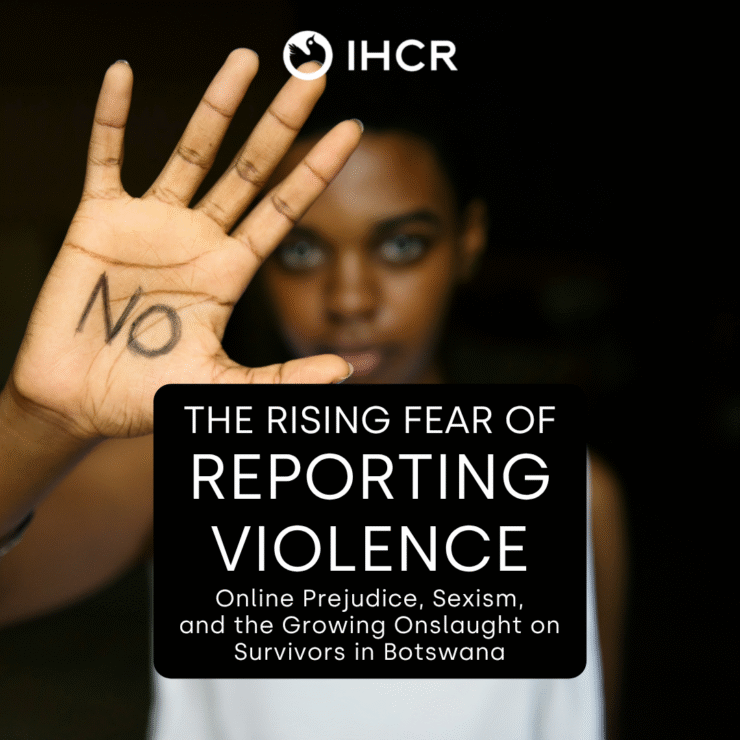
The Rising Fear of Reporting Violence: Online Prejudice, Sexism, and the Growing Onslaught on Survivors of Violence in Botswana

INTRODUCTION
In an era where the constitution, legislative reforms, judiciary restructuring, and the roll-out of constitutional courts are under review in Botswana, there is an undeniable need for massive change, solutions, redress, and most importantly, solidarity and targeted interventions in protecting the rights of survivors of violence. Women and girls undisputably continue to suffer the brunt of injustices perpetuated against them because of their gender. There is now a growing trend that threatens to make that suffering worse: those with big followings on social media, often known as influencers, are creating damning character assassinations of survivors of violence based on unscrupulous notions, through divisive attacks. This, unfortunately, is a cowardly act directed to dismiss, cancel, degrade, nullify, and render survivors’ claims of being violated.
Women and girls in Botswana have been subjected to abuse, sexual violence, and egregious discriminatory treatment, while the internet is being used as a vehicle to promote their suffering. These internet attacks impair survivors’ ability to report abuses without fear, deterring women from boldly speaking out about their experiences of violence. The attacks often highlight critical gaps in survivor protection and in recognizing what survivors may be going through, further subjecting them to excessive scrutiny and humiliation. This enables perpetrators of violence to commit unlawful acts of violence without due consequences, by providing them a pathway to tamper with evidence while continuing to intimidate survivors.
The Spate of Gender-Based Violence in Botswana
To understand why these online attacks are so dangerous, one must first understand the scale of this crisis. Botswana continues to record a high rate of Gender-Based Violence (GBV) cases, of which rape statistics are at the heart of such barbarism. GBV is rife in Botswana; statistics show that 67 percent of women and girls have been affected at some point in their lives. The numbers are staggering and paint a horrific picture of the state of affairs. The 2018 Relationships Study conducted by the Ministry of Youth and Gender Affairs also recorded a high rate of intimate partner violence, which proves beyond doubt that there is a huge underlying problem in relationships that needs to be dealt with both at a personal and community level.
With a population of just over 2 million, as reported by the 2022 Population Census, Botswana has made tremendous progress in addressing gender inequality, with some positive results. According to the Global Peace Index, Botswana has, for the longest time, been regarded as a highly peaceful country. Nevertheless, these GBV statistics reflect the Global Peace Index to the world in a different light—a light devoid of peace. It has been riddled with horrendous, gut-wrenching stories that have left the country in disrepute. There has been a tremendous surge of violent cases, which has left us in dismay; the country is affected, innocent lives have been and are still being lost, victims and survivors are in a lurch, and still the media adds fuel by spreading distasteful attacks on survivors.
Gender Based Violence in Botswana is appalling, especially the surge in rape cases, defilements, and so-called ‘passion killings.’ Women and children continue to bear the brunt of violence in the worst way ever recorded; despite these damning atrocities, laws are not stringent enough to deter perpetrators, as they continue to be granted bail, contributing to the risk of repeat offending and further victimization seemingly without consequence.
When Social Media Becomes a Second Assault
It is against this backdrop that the online onslaught does its most corrosive work. Recently, there was a sensationalized uproar on social media regarding a thought-provoking, compelling case that grabbed the nation’s attention. The issue is centered on a rape conviction that occurred in one rural area of Botswana. A young woman had reported a rape allegation against a man, claiming she had been forcibly sexually assaulted. The perpetrator was apprehended; a case of rape was filed and eventually prosecuted. When the matter was brought before the court for judgment, the Magistrate’s Court found the perpetrator guilty. Following the conviction, the rapist was taken into custody and remanded to jail, where he awaits sentencing.
This story then became a social media provocation when a well-known local Facebook influencer, highly active in covering the legal issues surrounding it, jumped on it. He provided ongoing updates about the case on his page, which were centered around vehemently chastising and criticizing the victim by attempting to invalidate and debunk her rape claim. Due to this rage bait, an uncontrollable onslaught of judgmental remarks was carelessly thrown by his followers against the survivor.
He further publicly went on to attack, discredit, and diminish the justice system, claiming it had erred when passing judgment. He surmised that the case was fabricated and that the suspect should be absolved from any wrongdoing. This has caused a major division, as most of his followers around the country sided with him. To add insult to injury, he solicited funds from gullible supporters to bolster the perpetrator’s appeal.
This alone showcases the extent to which survivors of violence face disdain, are exposed and unprotected, and suffer further from scandals, threats, and backlash. It is evident that such public campaigns cause an undeniable, frenzied attack and calculated reputational damage against survivors, drawing close attention to how anyone can publicly challenge a court judgment and interfere with the Court’s decisions. It raises questions about what legal consequences, if any, those who challenge court orders and put survivors under severe distress face.
The repercussions for survivors are undeniably clear, signifying a national impact that cannot be ignored: imposing vulnerability, diminishing the socio-cultural fabric of our communities, and damaging the peaceful, safe, and lawful functioning of our societies. Social media sensationalists have resorted to extreme rhetoric to drive engagement, posing a threat to those who may wish to report violence in the future.
The media should avoid contextualizing danger, framing how a crime was committed, altering information, and swaying the public in cyberspace. These kinds of repugnant actions expose the dark side of cyberbullying and exacerbate violations of survivors.
Lawmakers need to investigate such disorder and apply significant punishment to send a message to those who denounce survivors of violence, willingly undermine Botswana laws, and question the limits of compassion on our justice system for survivors. The government should not allow people who deliberately and openly cause commotions to avoid consequences, because their actions are damning and volatile. They have the potential to affect not only survivors of violence but the entire reporting system, which includes the police and the judiciary. Everyone deserves the right to be safe and the right to speak up against all evil injustices perpetuated against them.
The Functionality of Botswana’s Constitution and International Commitments
The Constitution of Botswana protects the fundamental rights and freedoms of individuals, and Botswana is a signatory to several key instruments, which means it has committed to align domestic law and practice with them. It has adopted frameworks such as the UN Convention on the Elimination of All Forms of Discrimination Against Women (CEDAW). The Government of Botswana has sustained the advancements made over the decades to improve the socio-economic well-being of women and protect their rights. This commits Botswana to ending discrimination against women in law, policy, education, employment, health, and family life. It is the backbone for addressing GBV, gender equity, and gender equality.
Protecting Women From GBV, Particularly Sexual Exploitation
Botswana’s establishment of the Sexual Offenders Registry Act has come at the right time to directly deal with these aforementioned issues to safeguard women and children against sexual violence. It limits opportunities for repeat offending and helps entrench societal norms. With the exception of establishing the sexual age of consent for both males and females at sixteen years of age, amendments, new acts, updates on certain sexual violence penalties, and revised policies, there are still clear gaps in place that hinder progress. Batswana should continue to fight for rights and dignity for all, especially for those with disabilities, who are often the most marginalized and out of reach. Otherwise, GBV will not end until everyone becomes part of the solution.
Freedom of Speech vs. Survivor Safety on Social Media
Journalists, media houses, and social media influencers alike must know that freedom of speech is not a license to harm. Yes, the Constitution protects free expression, but rights should be balanced; one’s right to speak should not override another person’s right to security of person, dignity, and protection of the law. Sensationalism for clicks, naming survivors, sharing graphic details, posting unverified allegations, or doxxing definitely crosses that line. It retraumatizes survivors and hinders their ability to speak out. It forces survivors to relive the offense every time it resurfaces, further intimidating and stigmatizing them. Public exposure can lead to victim-blaming, family pressure, or withdrawal of cases.
Many women won’t report if they think their story becomes content. Sensational posts can prejudice investigations, taint witnesses, and make a fair judicial process harder. That undermines the very redress we want from constitutional courts. When details are sensationalized, perpetrators learn tactics. When survivors are exposed, other potential survivors see that it is not safe to come forward.
The identity of survivors should be protected; identifying details of survivors should not be shared without explicit consent. The media should focus on facts, not spectacle, and report on the issue, the law, and system gaps — not graphic details for engagement, which ultimately treats trauma as entertainment. Influencers have power with their reach, and with it comes a duty of care. “Breaking the story first” should never beat “breaking the survivor.”
The Cybercrime and Computer-Related Crimes and Data Protection Act already set limits on unlawful disclosure and harmful content. The Sexual Offenders Register also works best when survivors’ details are not being circulated online. Enforcement has to match the law. Freedom of speech must exist to hold power to account, to debate GBV, and to push for reform. But when speech becomes sensationalism that endangers survivors, it stops being free expression and becomes slanderous. We can’t have a national GBV agenda if survivors are afraid that speaking up will turn them into a trending topic.
Survivor Support
For every nation, the pressure to silence survivors is cumbersome, counterproductive, and goes beyond the limits of justice, allowing perpetrators to act with impunity and shifting the emotional burden entirely onto survivors. Survivors’ lives matter; there’s a greater need to put them at the forefront and provide them with the support they need to heal and tell their stories. Navigating the aftermath of violence is exhausting without the added burden of a public online onslaught and re-traumatization. What is often left for a woman whose situation is chastised on social media is a hope that the law will take its course. Their stories should be a lesson that continues to raise hope in our communities and reshape ways of intervention.
Youth Participation and Activism on National Issues
Youth activism and calls for action have become one of the defining political languages of our time. Young people have repeatedly shown their power to shake political systems to their core. We have seen this when young people took to the streets of Gaborone, the capital of Botswana, to protest over high transport fares, living allowances, and other social needs. These demonstrations indicated a compelling demand for better support from government. The government, in turn, responded with a targeted solution to reduce bus fares and increase allowances to cushion their needs and keep their distress at bay. That speaks to the power that youth can bring about.
Yet in the age of digital dissent, activism is increasingly reduced to a wall of black squares, provocative hashtags, and hurtful rhetoric that vilifies and subjects others to trauma. Unfortunately, youth are the biggest followers of these social media influencers who torment survivors of violence. The line between genuine change and performative virtue grows thinner by the day. Modern youth activists should focus on reshaping the political landscape, not merely striving to be seen as doing so, but also, in hindsight, not supporting those who distort information to destabilize broader outcomes.
Youth are affected by GBV and in no way should they be left behind in combating violence in Botswana; rather, they should be encouraged to become part of the solution. Youth should be empowered to advocate for change to break generational cycles of abuse, which are often embedded in our homes, and they should use their bravery and outspokenness in publicly confronting issues to shift cultural mindsets. They should amplify digital voices by using technology, social media, and digital spaces to expose violence, support survivors, and educate their peers on healthy relationship dynamics. Activism should not be performative because the people it serves cannot afford it to be, and youth should be at the forefront of change.
Making GBV a National Priority for Us All
Gender-Based Violence in Botswana is talked about mostly in reports and campaigns. The President, Cabinet, and Parliament should make GBV a standing item — not just during 16 Days of Activism, but in every State of the Nation Address, budget speech, and policy rollout. They must boldly breathe it into every engagement, in every kgotla meeting, every diplomatic dealing, et cetera.
As leaders, they should make GBV a priority by dispelling myths and making it unacceptable. They should sing it like the gospel; no euphemisms and no silence. In every national engagement—in schools, churches, workplaces, sports, media, and corporate boards—prevention of GBV must be part of induction, curricula, and public messaging until it is entrenched in how young Batswana think. It is imperative to balance conversations by involving all parties. Batswana as a nation should embrace change and support victims and survivors of violence. Gender-Based Violence should be treated with the same urgency as a national crisis.
Talking about it and referencing it only in reports and campaigns once a year won’t shift culture. A cultural entrenchment is needed: one where respecting safety and dignity isn’t a project but a value.
Why Joint Action Against GBV Should Be a Priority
Gender Based Violence concerns women, girls, and children the most; they are at the receiving end. We keep preaching women’s empowerment and achieving gender equality, but as long as we allow GBV to persist in our communities, then all efforts to eradicate violence will be negated. GBV is a threat to Botswana’s democracy, peace, and security, and it is an appalling human rights violation that should never be tolerated.
Rights, access, and dignity for all must prevail; we must stand for those who are silent and remain in the clutches of GBV. We must advocate for laws that protect women and children from pervasive violence, stigma, the harmful attitudes of people in communities linked with their social and economic disadvantages, and the lack of knowledge and support to navigate the legal and social systems available—all of which are more debilitating than the violence itself.
What Needs to Be Done
GBV must be declared a national crisis, and survivors of violence should be included in programs that address their plight, not forgetting those in shelters. Developing interventions is a particularly powerful approach to challenge policy and practice. National and international funders should make survivors’ inclusion obligatory and monitor whether GBV prevention is considered in every aspect of proposals. Community sensitization should be conducted to educate the nation about the implications of violence.
More funding is needed to amplify voices and reach high-violence-prone areas in the deepest parts of Botswana. We need to establish pathways and interventions to change the mainstream and robustly fight GBV. The government should not shy away from acting on these laws, should impose an obligatory ‘no bail’ policy on those who commit heinous crimes, and should establish transformational and restorative interventions for repeat offenders. We need disciplinary approaches to correct excessive delinquency.
Lawmakers must also investigate the online disorder described here and apply significant punishment to send a message to those who denounce and willingly undermine Botswana’s laws and question the limits of compassion in our justice system for survivors. Everyone deserves the right to be safe and to speak up against all injustices perpetrated against them.
The current era of constitutional and judicial review is exactly the opening to close that gap. Botswana should turn treaty commitments and constitutional promises into daily reality for Batswana. Botswana has made an international commitment to end discrimination against women and ensure their full, equal participation in society, which means it must oblige and turn rights on paper into rights in life. Government must resource the promise and align budgets, laws, and court systems so that CEDAW commitments and constitutional rights deliver real protection, justice, and dignity for women and girls in every village and town.
The Constitution gives us the mandate, CEDAW gives us the standard, and this reform moment gives us the chance — and it should not be wasted.